
Dancing With Lithium

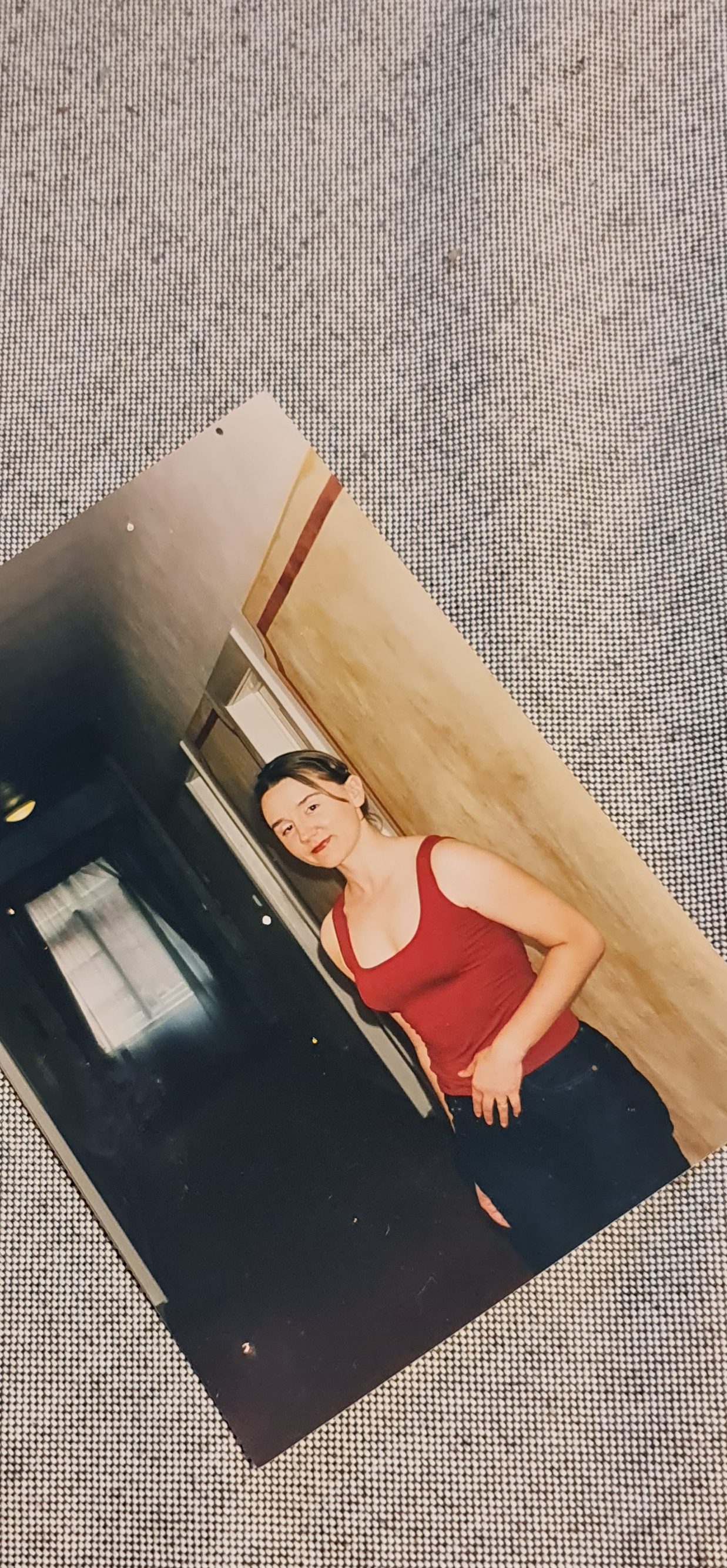
Prague 2002 – years before Lithium entered the chat

I remember the first time I became aware of Lithium. Not the battery kind. Lithium carbonate, the gold standard treatment for bipolar disorder. Especially bipolar 1 disorder. It was before I had a definitive diagnosis. In the murky months after I was introduced to mental illness by postnatal psychosis. 

My psychiatrist had said from the beginning that I could have an underlying bipolar disorder, had mentioned Lithium. I rejected this potential differential diagnosis.  

We never got as far as Lithium that first time. I was sucked into a rebound depression that spread from dullness to catatonic in days. It was the necrotising fasciitis of psychiatry. It needed more than pills to stop it. A course of 12 electroconvulsive therapy treatments recovered me to the point of being able to go home with my then four-month-old baby.

I fully recovered.

18 months later I gradually came off all my medications and was fine. I risked smugness. So much for an underlying bipolar disorder. My psychiatrist reminded me patiently that I would have to be symptom free for 3-5 years to rule out bipolar disorder more definitively.

I didn’t make it to 5 years. I got sick again with my second (and last) baby 2 years later, and went on to have classic bipolar 1 episodes every 2-3 years.

By the time my psychiatrist suggested Lithium again, I was in the throes of psychosis, delusional and still in the stage of lacking insight common to early episodes of severe mental illness.

I laughed.

‘I’m not sick enough to need Lithium.’

I was convinced I was being offered it as a test, and that to pass the test, I needed to refuse to take it.

Eventually the trust in my psychiatrist penetrated the delusions, and I was persuaded.

It came with warnings. Stay hydrated. It can give you a metallic taste in the mouth. We need to monitor your kidneys, and thyroid, and most importantly blood Lithium levels. Too high and you risk Lithium toxicity, which can be fatal.

The list of potential side effects is long…like for paracetamol. I weighed them against the potential benefits, which included reducing the severity and frequency of my symptoms. Each bipolar episode had left me sifting the ashes of myself through once capable fingers. I was tired of working hard to re-establish my life only to be levelled again and again.

It’s been fifteen years since I tentatively welcomed my first dose of Lithium into my body. It’s not a cure. It is not solely responsible for reducing symptoms. It is a main character in my cast of management tools. I still get sick enough for hospital every couple of years, but not as severely and not for as long.

Lithium steadies me. It leads when I am the autumn leaf, caught in the whirlwind of my special brain chemistry, crunchy and fragile under life’s boot. It steps back when I settle, just a steady presence, swallowed twice daily. Solid ground in the house of my life. I don’t think about where I’d be without it.

It hasn’t asked for too much in return…so far…

Fine, intermittent hand tremors wobble my liquid eye liner. I could no longer perform surgery… if I still worked as a vet.

My thyroid function is compromised. Thyroxine is an easy fix… Even my endocrinologist agrees it is easier to supplement the thyroid than to attempt my life without Lithium.

Individual responses to Lithium like so many psychiatric medications are variable and fickle. I know someone who almost died of Lithium toxicity, many with impaired thyroid function, others whose kidney function meant they weren’t compatible with lithium, or it just didn’t work for them. It’s not for everyone.

My Lithium levels have always been where they should be. I don’t take that for granted.

But then came Thursday last week, and the unwelcome news of elevated Lithium levels. Not rush me off to hospital high, but high enough to have my psychiatrist and I contemplate the house of cards that is my medication regime.

Neither of us like this. We know from experience that even a gentle tug of one card can send my next several months toppling around my ears. So, we agreed to an almost microscopic reduction in my Lithium dose, hoping to bring the levels down without angering my brain into symptom mode. We’ll recheck levels in a month.

My dance with Lithium has been one of many things that have gifted me a beautiful quality of life. Fingers crossed it stays that way.

Lithium

World Bipolar Day (WBD) 2025

CW: minor mention of severe bipolar 1 disorder symptoms – no detail

It is World Bipolar Day again. Some years I’ve celebrated and advocated. Others I’ve greeted the day with anger. Others again it has barely registered.

I first became aware of WBD around 2018, the beginning of Thought Food and my training as a peer ambassador with SANE. The beginning of my mental health advocacy era. Over years I have poured thousands of words borne of my lived experience and opinions about this illness into Thought Food. Some perhaps a little naive, but they felt right at the time.

For the last year or so I have had nothing new to say about this slippery illness whose symptoms and response to treatments vary from patient to patient.

But my algorithm made it impossible to forget that WBD is today, and I didn’t feel averse to a spot of writing. So here we are.

My bipolar disorder keeps me humble.

It reminds me I can’t shove myself through brick walls driven by ego and will, the way I did before it joined me.

How do I feel about living with it?

I won’t sugar coat it. My last hospital admission was 6 months ago. Except for a brief period off medication between having my two children, I have been medicated – some would say heavily, but it’s all relative – for 18 years. My thyroid gland has malfunctioned on some of the bipolar medication. Brain trumps thyroid. So, I take thyroid medication to negate the effects of that bipolar medication. I have regular blood tests to monitor other organ systems for compromise from the bipolar medications. If my kidneys take a hit, I will have some big decisions to make. My lifespan is likely to be 10-15 years shorter than the general population courtesy of bipolar 1 disorder, a little less if I manage to dodge suicide.

If this sounds bleak – read on. It’s not all bad.

When I am not symptomatic, which is most of the time, my quality of life sits between good and excellent. I am psychologically healthier than most people I know who don’t live with mental illness. I have worked to get my relationships into good shape. I don’t tolerate toxicity or a lack of self-awareness in those relationships.

I know how much energy I have and where I want to put it, always. Exercise is non negotiable for my health, so I do it and reap the endorphins. For me the idea that bipolar medications stifle creativity is a myth. I fully enjoy my creativity when my brain has been unscrambled by my medication. I am not particularly worried about possibly living for less time because I have the tools to make whatever time I do have great.

In the beginning bipolar 1 disorder threw everything it had at me. Horrifying psychotic episodes, unstoppable mania, catatonic depressive episodes that only responded to electroconvulsive therapy, and suicidal ideations.

I can’t predict what it will challenge me with next, but I have learnt that developing insight into my specific symptom patterns and responding quickly to recognising those patterns when they occur, rather than denying they are happening – as I did in the early years – is key to avoiding the worst ends of the bipolar spectrum.

Early intervention for each episode is crucial. For me that usually means hospital admission to monitor symptoms and adjust medication as needed. My early hospital admissions were often months long. My most recent admission was two weeks.

Now for a bit of advocacy.

If you know someone newly or not so newly diagnosed with bipolar disorder, give them patience. It takes appropriate treatment and support from loved ones to gain initial stability.  

In the long term, it also takes hard work and time for the person living with this illness to secure two of the most important contributors to well managed bipolar disorder:   

The insight and acceptance to allow them to live with respect for this illness and the space it will occupy in them for the rest of their lives.

Surviving On Snippets Of Hope

I know people who don’t consume the news anymore. Others avidly click, swipe, and share and demand the shares be shared and that donations be made.

A sense of needing to ‘do something’ beats like a heart behind our screens.

Some say the carnage and its causes are complex. Others claim it couldn’t be simpler. Meanwhile, powerful, malevolent toddlers masquerading as leaders extinguish lives with their belligerent tantrums. This kind of hellish tit for tat has been going on all over the planet for aeons. There’s nothing new about our news.

The atrocities we were clicking and swiping and enthusiastically sharing and donating to a year or two ago, are far from over.  This trauma has not stopped. It’s just not as fresh as what we are fed from further south right now.

While my bipolar disorder sleeps, I choose to neither soak myself in headlines nor bury my head in our (increasingly hot) sand.

I have always struggled to understand warring over a homeland, because (regardless of my genetics, birthplace, or heritage) I don’t identify as belonging to a country or a people. I was taught to be a chameleon, a grateful visitor wherever I go. It has been drilled into the DNA of my family who moved around a lot, who has flight in its history, whose ancestors have done their best not to be in the wrong place at the wrong time.

I don’t believe humanity has quite enough humanity to ever achieve world peace. If we had the capacity to resolve conflict without collateral civilian casualties, we’d have done so a long time ago.

Our individual lack of control over global catastrophes and atrocities can feel depressing. But we can each control how we react to our feelings. Providing we are not experiencing a severe episode of clinical depression, we can feed our sense of hope by turning a microscope on our own lives and surroundings.

Good stories play out near us all the time. I witnessed one on holidays at the beach recently:

A not so gentle day. Dumping waves boiled the water. One after the other. If you got caught up in one of those you became an ingredient in a soup of flailing limbs. A bit closer to the shore we laughed and played in the sea foam bubble bath, eyes always on the incoming, legs resisting the drag out into the angry ocean.

Then to my right a little girl, five or six, began to cry. The wash after a wave swallowed her and spat her back up like an acorn. Spluttering, she looked wildly about. I assumed the woman near her was her grandmother. She scooped up the crying girl and pointed to some other adults nearby. The girl shook her head, sobbed red faced, hair plastered to her head.  I just caught the older woman’s words above the rush of water.

‘Can you point to your mummy or daddy darling?’

The girl was crying too hard for speech, too hard to point. This was not her grandmother.

Yet she positioned the girl on one wide hip and purposefully strode away from danger. Finally, where the waves petered out onto the sand, the girl’s father appeared, and a narrative that could have played out so badly, ended well.

While the brutality of the news can suck the happiness out of our heads, good things still exist. And they don’t need to be stories. Simple snippets suffice:

Taking refuge from a storm in a second hand book shop.

 Sleeping cats.

A tidy bedroom and a good book.

The sound of cicadas.

Wildlife visitors.

Converting ingredients into a meal.

Having a kitchen to cook in.

A warm hand to hold walking in the summer breeze.

A rainbow, thunder, and lightning occupying the sky all at once.

The clink of ice cubes against a condensation beaded glass, and the first sip.

Clean pyjamas after an evening shower.

Children growing into themselves.

Free will and choice…

When I disengage from my screens for long enough to look around me, snippets appear everywhere.

I have at times been guilty of outrage in response to what my screens feed me.

But, for me, outrage on its own achieves little. It is hot air shouted into a furnace. And it is a luxury I can’t afford or sustain, because ongoing outrage can convert into powerful fuel for a bipolar episode.

On the other hand, deciding to tend the happiness in my own backyard builds the strength to do meaningful things for myself and the wider world.

PS: If you are clinically mentally unwell, then the suggestions in this post to focus on the positives around you apply only if you are well enough to do so. Symptoms of severe mental illness, especially clinical depression, can make it impossible to focus on the positives without more targeted treatments, such as psychological or medical therapies.

For me, a sign that I need more support than the power of positive thought is when I find it impossible to focus on the positive, and guilt and negative self-talk set in, because I’ve failed to appreciate the positive.

Lastly, if I were currently experiencing a bipolar episode I would not consume any news, and would focus solely on recovery.

You may also like:

Gentle Shoots Of Hope

Deciding To Hope