
The Postpartum Psychosis Circus Is In Town

It’s in the news again. Postpartum psychosis (ppp) with a dreadful outcome. I feel caught in a murky riptide of misinformation and hot takes.

I experienced my first episode of ppp 20 years ago. The second just over 16 years ago. I began writing and speaking about it 14 years ago. I’d earnestly hoped writing about my experience would help shift the stigma around this illness.

Things have changed, but I am not convinced much has shifted.

In the beginning, the traditional media almost never resisted the almost pornographic pull of describing the women who succumbed to ppp as demonic.

The way we consume our news and entertainment has evolved or devolved depending on your point of view. Either way, 20 years ago the internet was younger and social media didn’t exist.

Today many more people know about the American woman standing trial for murdering her three children whilst allegedly in the throes of ppp, than they would have 20 years ago.

If you click on just one post the algorithm will vomit everything that is current about ppp, mostly based on this case, into your eyeballs.

Is this a valuable acknowledgement of this rare, devastating condition? And will it reduce some of the stigma it is steeped in?

Yes and no.

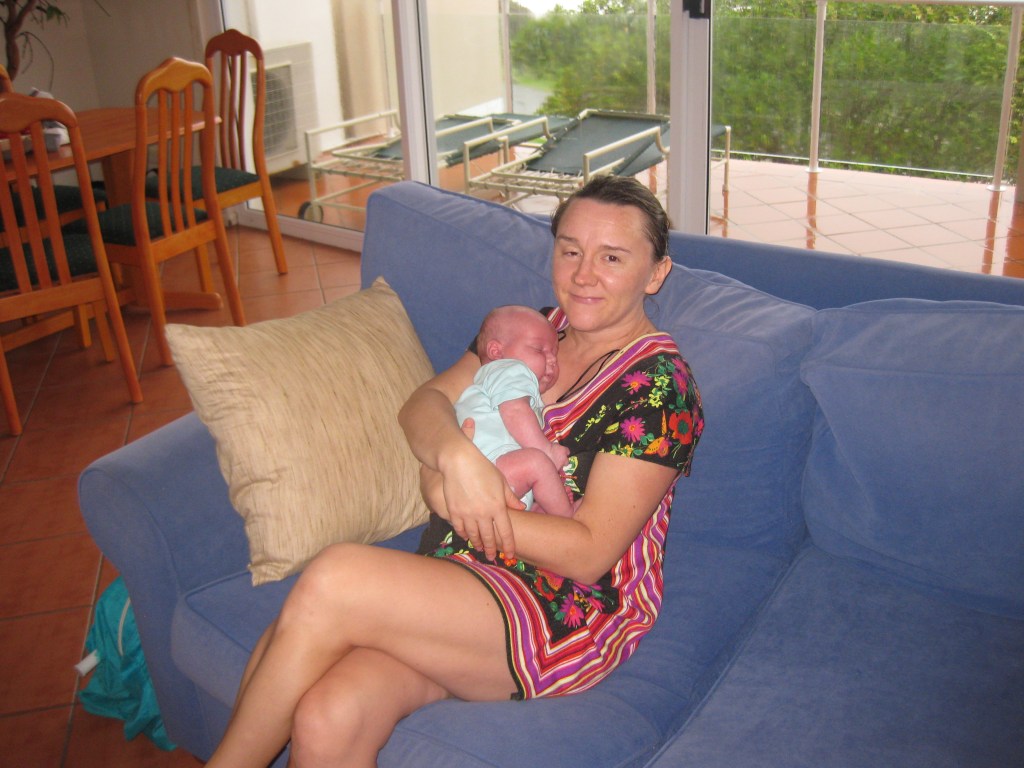
The positives are that in the wake of the talk and comments about it, women who have survived ppp have felt safe enough to post about their experiences.  They look into the camera, cradling their babies, like a million other new mothers on social media. In doing so they show ppp has many different faces, that it can happen to anyone, and that it is possible to look normal while your thoughts are lying to you.  

Plenty of women who have experienced perinatal depression (pnd) and perinatal anxiety (pna) are also voicing their stories of being trapped in the dark, airless corners of motherhood.

Many have fallen through the cracks of a mental health system too.

They say: ‘That could have been me.’

Yet, invariably every ‘That could have been me’ is followed by a powerful caveat: ‘Except for the outcome’, which means ‘That could never be me.’ 

The incidence, degree of stigma around, and treatment of pnd and pna and ppp is different and conflating them is misleading.

All of these conditions carry a risk of suicide, but the risk of infanticide due to pnd alone is so low it lacks a statistical percentage. For women who experience ppp the risk of infanticide is about 4% if left untreated.

In the context of this court case any woman with lived experience of a perinatal mood disorder has earned the right to step into this discourse or to give it a wide berth.

Beyond lived experience posts and a handful of reputable professional sources, it mostly feels like a circus out there.

Content creators are virtually camping outside that court room in America and are creating a freak show to slaver over, greedy to extract every salacious morsel they can out of a broken woman’s agony.

There are posts from alleged mental health professionals doing a to camera piece on how scary it is to be in a room with a patient with ppp, centring the experience solely on them.

Psychiatrists, other medical professionals, and lawyers pick over the bones of this case, and a woman’s sanity on Instagram. It may be well intentioned, but it is also for the entertainment of their followers.

There are lawyers, nurses, and content creators dressed for a picnic or book club meeting, sometimes including a pet, with a glass of red wine or an iced latte in hand giving us their hot take on this case and the people involved.

They remind me of the women knitting by the guillotine during the French Revolution.

I have been diving in and out of comment sections in the last few days.  My exchanges have generally been respectful. They have also thrown up interesting questions. Sharing my thoughts on one iced coffee wielding content creator’s page prompted them to ask me ‘Would you rather we didn’t talk about it at all?’

It is a double-edged sword. Yes, it needs to be discussed. But is all publicity good publicity? 

I responded by asking how they would feel if only the worst one-dimensional views about their demographic were being picked over and posted by people who had not lived it?

The years of writing about my experience of early detection and appropriate treatment of ppp, of surviving with my family intact feel like I have been shouting myself hoarse into a widening void.

Survival is boring. Having happy, healthy adult and nearly adult children is boring. Not facing life imprisonment is boring. Good outcomes are not click bait.

And yet for women who have experienced ppp, or who are experiencing it, the most important thing for them to know is not that this condition could end their lives, their children’s lives, that their experience could end up being torn apart by vultures on social media, but that devastating outcomes are not a foregone conclusion of postpartum psychosis.

The most important thing for them to know is that there is hope.

Below is a sample of some of the other writing and speaking I have done about postnatal psychosis:

Guilty Of Postnatal Psychosis

Media-Made Monsters

https://www.abc.net.au/listen/programs/conversations/conversations-anita-link-rpt/9009148
Mental Health Snobbery

Is stigma surrounding mental illness only generated by people who have never been mentally ill?

No.

There is a version of the S-word that lurks below polite conversations about ‘stigma surrounding mental illness’. It occurs amongst people who experience mental ill health, and it is camouflaged by the notion that we are all in this together and all experience a similar level of stigma.

But we are not, and we do not.

I first became aware of this after my encounter with acute Postnatal Psychosis, and the rupture from reality that accompanied it. My experience didn’t fit the binary mould of the common Perinatal Mood Disorders: Perinatal Anxiety (PNA) or Perinatal Depression (PND).

Over time, I discovered that (not all but some) mothers who have experienced PND or PNA, especially if it is mild, carry harsh opinions about those of us who need medication and hospitalisation or who live with other diagnoses.

Some examples:

I once read an account by a woman who was able to resolve her mild PNA by going to a special mother’s group, which, she wrote:

‘Thankfully didn’t have any loonies in it, just normal mums who were struggling a bit.’

Another time, when I was hospitalised in the Mother Baby Unit of a private psychiatric hospital, I heard a group of mothers cackling in the common room:

‘At least we aren’t like the real crazies in the rest of the hospital.’

This snobbery irritated me at the time. Several years later, I became one of the ‘real crazies’ (patients in the main hospital) and… felt sad for these women who left their experience of mental illness with the same narrow mindset they had entered it with.

That said, most of us start the ride into mental ill health with biases.

I remember during my first admission, two of the mothers in the Mother Baby Unit were having ECT (Electroconvulsive therapy). I didn’t have any strong conscious opinions about ECT. But if I’d been asked, I suspect I’d have said: ‘That will never be me.’

Six weeks later, that was me.

ECT is still one of the most stigmatised treatments. Some of the strongest perpetrators of that stigma are those living with mental illness who have not had ECT.

 A couple of years ago, I encountered another patient in the hospital to whom ECT had been suggested as a treatment option. She asked me about my experience, and then said:

‘Well, I am a scientist and need my brain to work properly, so I can’t consider having ECT.’

I swallowed the prickly implication she had just hurled my way and thought of the surgery I had performed, the book I’d written, all the ways I’d successfully used my brain post ECT. I avoided that person for my remaining admission.

Patients new to mental illness often inadvertently extend their self-stigma to others.

During my last admission another patient told me that they had been in hospital for a week and that they were worried about the length of their stay. They asked me how long I had been in for. I replied: ‘This admission? Three weeks’

They visibly recoiled. Their thoughts may as well have been printed on their forehead:

‘More than one admission? Three times the length of my stay? And you are still here?’

I didn’t add that for me, three weeks was a minimum length stay, that in the past I had spent months hospitalised, that I would never be cured. Instead, I said:

‘Just take one day at a time, and don’t compare yourself to anyone. Everyone is different.’

But I know it can be tempting to play the comparison game. When I feel frustrated and vulnerable, my thoughts can turn poisonous:

‘Must be nice, to only have to take one medication or none.’

 Knowing very well that there is nothing nice about having to take even one medication or being unwell, even if you don’t need medications.

And that moves us on to the medication debates.

Before I came down with Postnatal Psychosis and Bipolar Disorder, I was a reluctant medication taker. I wasn’t specifically anti psychiatric medications. It had just never occurred to me that I would need them. Then I got so incredibly sick, that the prospect of refusing something that might help me was ludicrous.

Today the debates around psychiatric medication stigma tire me, because it is simple. If you don’t need medication to help manage your mental illness, that is awesome for you, but it doesn’t make you stronger, or better than anyone who does.

Anti-medication stances are a luxury not everyone can afford. Voicing that stance without acknowledging the accompanying privilege, can stigmatise those who do need medication to manage their illness.

And appearances can be deceiving. Someone experiencing moderate or mild symptoms without access to good mental health care, may suffer more than someone, like me, whose symptoms and treatments may look worse on paper (psychosis, ECT, etc) but who has had consistent access to excellent quality mental health care.

No one’s lived experience should be used to minimise or stigmatise someone else’s.

So, whether this is your first and only episode of mental illness or it is one of many, or you’ve been lucky enough to never experience one,  when you form an opinion about others living with mental illness, please replace judgement with compassion and think before you speak or write.

You may also be interested in the following posts:

Psychiatric Medication And Stigma

World Maternal Mental Health Day: It’s Not All Postnatal Depression

Welcome To Motherhood

ECT: Blowing up some myths – Part 1

ECT: Blowing up some myths – Part 2