Unapologetically Fifty

How to mark turning fifty? For me? Two ways.

First, I sought solitude.

A weekend away with myself, books, writing implements, a beach, and the ticking of a clock in absolute silence (a sound I love in a way no one else in my family does). –

I relished the feel of sand moulding itself to the arches of my feet and the rush of eternal waves onto the almost empty beach. I ran into the bracing water, and it yanked the breath from my lungs. But once I’d dived in, I adjusted quickly to the foaming, swirling rush of it. The plunge through the waves – like moving through liquid glass. And I was alone. Gloriously so.

I could have stayed longer, happily cocooned in my own company.  But I came away with a handful of seashells and some jottings about what fifty means for me.

To date I have hungrily embraced each new decade, and I am not bothered by being midlife (if I live a long one). But I wince at some of the connotations the world cloaks this age in.

I grimace at ads for ‘Fit over fifty’ exercise classes and independent living communities for fifty plus people. I am not ready to go gently into ‘age appropriate’ exercise or towards ‘communities’ of over fifties who wander aimlessly through their last decades. And the prospect of fifty rendering me eligible to enter the geriatric wing of the hospital whenever the next bipolar episode strikes, feels horrific.

My view of fifty?

I am grateful for a body that works well most of the time and that exercise has been a part of my life for long enough for me to know what gets my endorphins going. I have no idea what I weigh, and providing my size doesn’t interfere with my ability to exercise I don’t care.

 Small age spots have bloomed on the top of my right hand, where sun hits skin when I drive. A recent selfie captured some crepey skin around my neck. And surprise jolts me when I look at it because I don’t feel old enough to have this skin. But I move on. Same with my wrinkles. I don’t necessarily love them, but I love them enough to spend money on books, chocolate, and clothes that fit well rather than on Botox.

I am not into anti-aging products and procedures. Not because I don’t care at all about my appearance.  A pretty dress and a good lipstick wrap me in joy when I choose them. But so far, I haven’t turned ‘stopping the visible signs of aging’ into a full-time job I’d be paying money to do.

For me, pregnancy and childbirth did not leave behind stretch marks, varicosities, or cellulite, and my pelvic floor is in great shape. Instead, they triggered my bipolar 1 disorder, which I’d happily trade for some stretch marks.

I don’t worship at the altar of motherhood or martyr myself for it. And I don’t believe in fetishising motherhood into it being the most important, meaningful thing a woman can do. I love my children with a heart squeezing intensity. But that love doesn’t erase the sucking-you-dry-if-you-let-it aspect of mothering.

As for wisdom?

I don’t believe people automatically acquire wisdom with age. If you don’t work for it, you just end up being an older person whose beliefs and opinions calcify into tired well-trodden paths that lack nuance and become almost impossible to break free from.

Some of my rotten patterns have taken decades to unlearn again and again.

I was a perfectly formed perfectionist even before I entered a profession in which the stakes of mistakes are high, and perfectionism is rife and revered. I marinated (quite happily) in the culture of veterinary practice for twenty years. But it has taken a long time to view my perfectionism as deleterious to my mental health rather than as an asset to my career.

I have only recently loosened the white knuckled clench I’ve had on the course of my life and (mostly) relinquished a poisonous, deeply learnt, inbred need for control.

For me, perfectionism and control come with rigidity, and judgement. And while understanding the concept of letting these things go is easy. The work to do it is hard, boring, and ongoing. At times I still slip back into all of them like pairs of comfortable slippers.

The endless pressure to achieve has now mostly evaporated. In its place I recognise that I have more to learn than I ever have and a sense that whatever is next matters.

I have flung open the window toward fifty now and am ready to see what possibilities lie beyond this age for me.

And my birthday wish? That if I put in the work, my words will keep coming.

PS: My second way to mark fifty involves great company and cake. A lot of cake.

You may also like: Birthday Conversations

Losing My Senses

I have never been so grateful to smell cat shit in my life.

But let’s add some context for that sentence.

A few weeks ago, I went out for a friend’s birthday dinner in a small, busy restaurant. Indoors, noisy. There was a lot of leaning in and speaking loudly to hear and be heard. Within a couple of hours, tongue bitten from sitting across from someone who told me they didn’t believe Covid vaccinations had been sufficiently tested for safety, I was ready for home.

Three days later tiny terrorists held me hostage in my room. I was tethered to my bed by sticky tissues and vicious spike proteins digging in to my respiratory tract. Sick, but not my usual sort of sick. I cancelled plans for the week ahead as Covid leapt through the family. And I marvelled at how easy it felt compared to cancelling things for a Bipolar hospital admission. In 2023 everyone can relate to Covid cancellations.

Prior to contracting Covid, the things I was most concerned about, should I be infected, were likely to be things of no concern to most people. I am grateful I don’t live with any type of immunocompromise or chronic respiratory condition. Neither does anyone in my family. And yet I have continued to wear a mask to the shops without caring what people think.

Because I am vulnerable to collateral Covid damage.

Anything that potentially interferes with my sleep or ability to exercise increases my risk of a Bipolar episode. Covid does both. Then there is long Covid. The stress of living with this nasty reality would skyrocket my risk of multiple Bipolar episodes. And then there is losing my senses of taste and smell. As someone who begins to feel depressed if these senses diminish with a cold, the prospect of potentially losing them long term or permanently was horrifying.

I imagine everyone values their senses differently. When it comes to reasons to breathe, I am someone for whom smelling is as important as oxygenation. I don’t mean I am someone who just appreciates nice perfume and the smell of freshly ground coffee – although I do.

I am also someone who knows the smell of my husband’s sternal notch, the dip between his collar bones at the base of his throat. It is an olfactory hug, a smell I could pick out of a line-up of other sternal notches.

I know the softest fur behind my kittens’ ears smells of butter and air. The smell of garlic sizzling in olive oil or a chocolate cake just ready to be taken out of the oven are pure dopamine hits for me.

So, when Covid blindfolded my sense of smell on day five, and in doing so kidnapped one of my greatest sources of joy and information, I panicked…enough to google how long this was likely to last. It can be as little as five days…but sometimes this black out lasts for 6-12 months or is permanent.

This loss of smell was not like the kind I’ve experienced with a head cold. It wasn’t associated with nasal congestion. My nose was clear and breathing air in a world apparently devoid of all scents and odours. I realised quickly that aside from the discombobulation and depression of living with no nose, there were practical difficulties. Sniffing potentially spoilt milk – nothing. Toast burning to charcoal – nothing. A rotting potato decomposing in a black pool of noxious liquid at the back of the potato storage drawer – totally undetected.

Without smell to accompany it, my sense of taste was reduced to only being able to differentiate sweet from salty foods.

I began to bargain in my head. Which of my other senses would I give up in exchange for my sense of smell? Impossible. I don’t want to lose any of my senses.

Thankfully, for me, the blindfold loosened within ten days. I began to smell around the edges of the world again. Strong smells returned intermittently and then faded away again. The fading times lessened. I discovered the foul stench of the decomposing potato that had been reverse air freshening the kitchen for at least a week. Cat shit re-entered my nasal vocabulary. And with time so have the subtleties of air and butter on kitten fur,

As for the Bipolar risk factors that accompany my visit from Covid, I’ll have to wait and see. The last couple of months have carried other stressors with them too. From experience, my Bipolar episodes tend to sit back patiently while the risk factors peak and the stress unfolds, and then set in as a special treat once things settle down.

So I am moving carefully through the world with my fingers crossed, while I enjoy being back in the world of the smelling.

You may also like to check out

Covid Lockdown In A Psychiatric Hospital

When Covid-19 And Bipolar Recovery Collide With Unexpected Results

Mental Illness Doesn’t Respect Deadlines

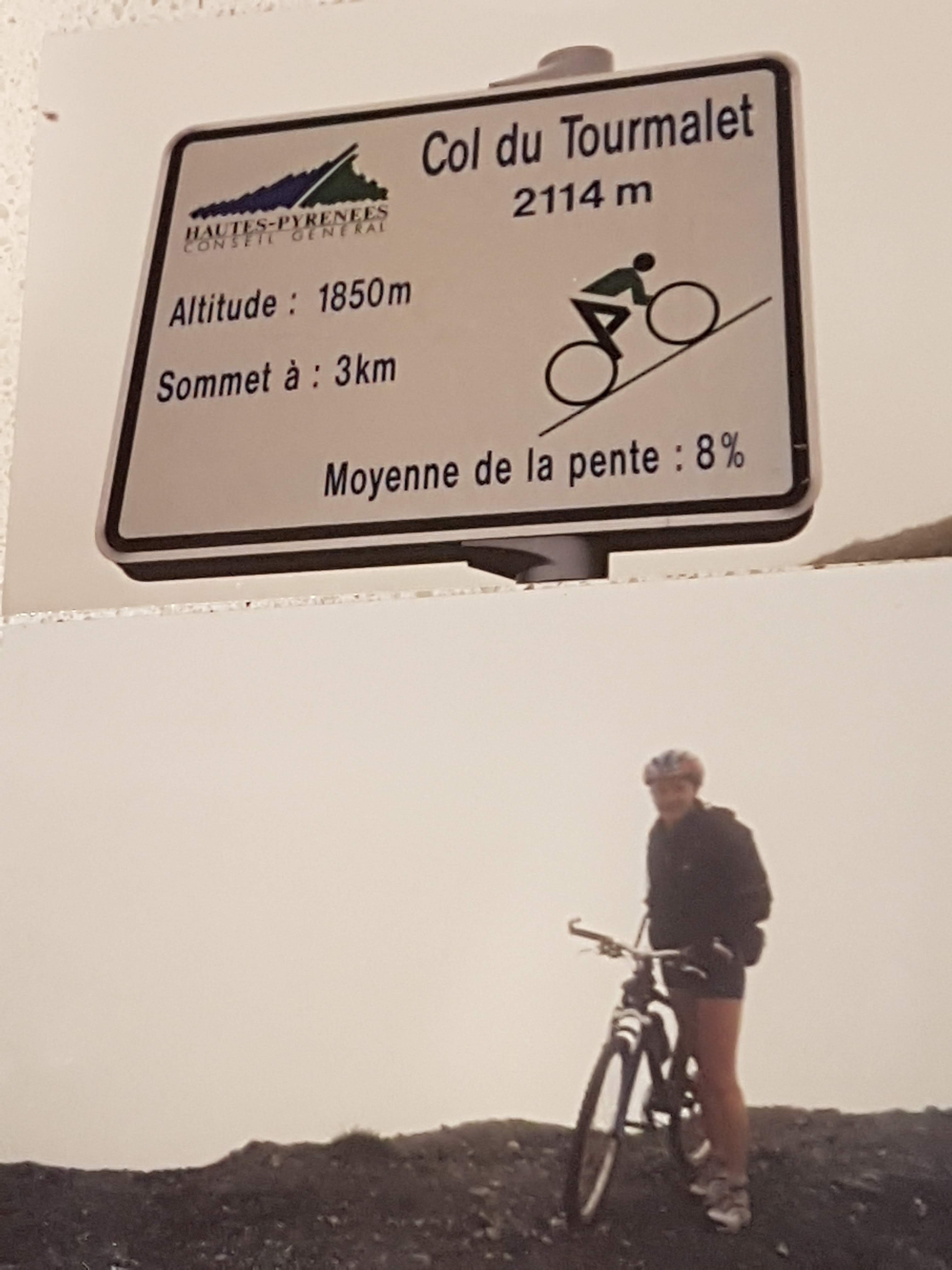
20190729_064126
September 2001 – Ascending the Col du Tourmalet

‘How long until I’m better?’ gnaws at my insides.

When I ask my psychiatrist that question, he always answers honestly:

‘I don’t know how long, but you will get you better.’

That ‘I don’t know’ even when it’s followed by a promise of eventual wellness, is brutal.

Many years ago, my husband and I took part in a cycling trip over the Pyrenees from the south of France into Spain. The route followed the same path as the Tour de France sometimes does. The first day took us up the Col du Tourmalet, one of the longest and steepest climbs. We rode around twenty kilometres to the base of the mountain and then climbed for close to another twenty, each one steeper than the last, the air getting thinner and thinner.

The last two kilometres were gruelling. Mist closed in. We could barely see the drop off the edge of the mountain. We rode on our lowest gears. Our bones turned into burning jelly and our lungs felt as though they were trying to extract oxygen from water. We were forced to stop to catch our breath every twenty or thirty metres.

But there were markers to show us we were getting closer to the top. Mental footholds in the misty, painful, breathless soup. We had answers to ‘How much longer?’. And with them came hope and the tenacity to keep going. Although it was unbelievably challenging, we had an end point to work towards.

Continue reading “Mental Illness Doesn’t Respect Deadlines”

My Mental Health Toolbox

PWC keynote image

This week I had the pleasure of giving a keynote address for one of the departments at PWC (Price Waterhouse Coopers). As part of this I ran through some of the things I have found helpful to help me monitor and manage my mental health.

I got some really positive feedback after the presentation and requests for the list of things that help me with my mental health. So I thought I’d share that list as a post here:

EARLY WARNING SIGNS AND INSIGHT:

In this context insight is the ability to identify early signs of mental ill health in yourself. This is much more challenging than it sounds, because signs of mental illness can masquerade as normal feelings and emotions.

For example – irritability and sadness are part of the normal spectrum of human emotions, but if they are overwhelming and persistent and interfere with normal functioning, they can also be symptoms of depression.

It can take time to identify their intensity or persistence as abnormal. The other challenge is that when we are well, we can often think our way out of sadness or irritability. But when they become symptoms that is impossible.

Someone affected by symptoms of a mental illness can no more think their way out of them than someone with a nasty case of gastro can think themselves out of their vomiting and diarrhoea.

But whereas vomiting and diarrhoea are obvious signs of illness (both to the person experiencing them and everyone around them) it takes insight to recognise when symptoms of mental illness emerge.

For me early warning signs can be an inability to sleep even with a lot of medication, intense irritability, and poor short-term memory and concentration.

Early warning signs are different for everyone. By learning what ours are we can be proactive about seeking help rather than waiting for symptoms to worsen.

For further reading on an example of insight into a depressive episode you can go to: Razor Blades In Mud: Laziness Or Depression?

Continue reading “My Mental Health Toolbox”

What a mental illness can teach you about your mental health

jony-ariadi-197568-unsplash Photo by Jony Ariadi on Unsplash
Photo by Jony Ariadi on Unsplash

Here’s a paradox: My mental health improved after I developed a mental illness. When I am not symptomatic (which is a lot of the time) my mental health is fantastic. It is possibly better than that of many people who don’t live with a mental illness. Here’s why:

Mental illness can teach you a lot about mental health, because it confronts you with the choice to change the way you approach your life.

Continue reading “What a mental illness can teach you about your mental health”

#NotFitspo

20180310_174106
Mirror message at the gym

ON GOOD DAYS WORK OUT

ON BAD DAYS WORK OUT

HARDER !

At the risk of incurring the wrath of the fitness industry: I don’t agree.

My first thought when I saw and snapped this image was: ‘YES – so true.’

But then I stopped to think about how this statement applies to me and my exercise habits. I realised it was simplistic at best, and dangerous at worst. Here’s why:

Continue reading “#NotFitspo”