Dancing With Lithium

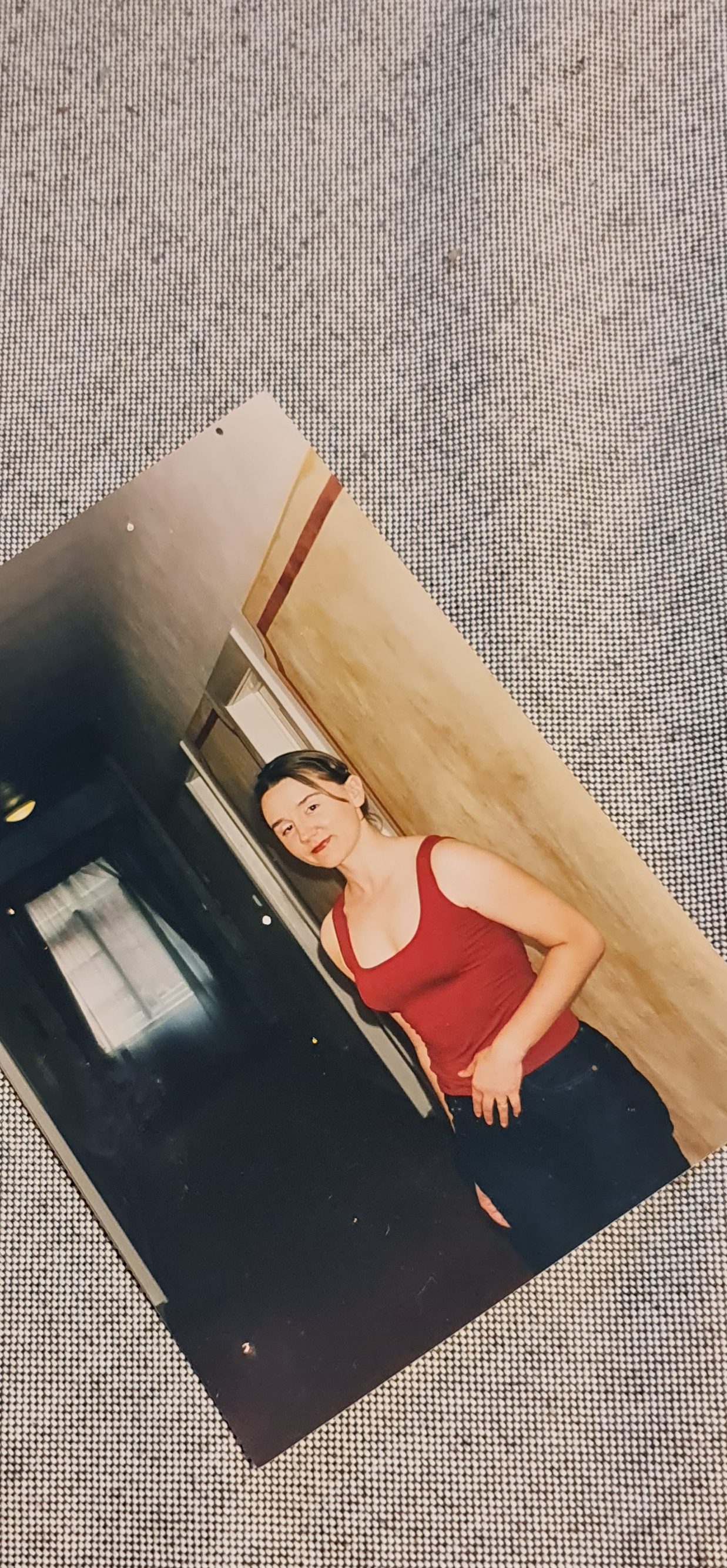
Prague 2002 – years before Lithium entered the chat

I remember the first time I became aware of Lithium. Not the battery kind. Lithium carbonate, the gold standard treatment for bipolar disorder. Especially bipolar 1 disorder. It was before I had a definitive diagnosis. In the murky months after I was introduced to mental illness by postnatal psychosis. 

My psychiatrist had said from the beginning that I could have an underlying bipolar disorder, had mentioned Lithium. I rejected this potential differential diagnosis.  

We never got as far as Lithium that first time. I was sucked into a rebound depression that spread from dullness to catatonic in days. It was the necrotising fasciitis of psychiatry. It needed more than pills to stop it. A course of 12 electroconvulsive therapy treatments recovered me to the point of being able to go home with my then four-month-old baby.

I fully recovered.

18 months later I gradually came off all my medications and was fine. I risked smugness. So much for an underlying bipolar disorder. My psychiatrist reminded me patiently that I would have to be symptom free for 3-5 years to rule out bipolar disorder more definitively.

I didn’t make it to 5 years. I got sick again with my second (and last) baby 2 years later, and went on to have classic bipolar 1 episodes every 2-3 years.

By the time my psychiatrist suggested Lithium again, I was in the throes of psychosis, delusional and still in the stage of lacking insight common to early episodes of severe mental illness.

I laughed.

‘I’m not sick enough to need Lithium.’

I was convinced I was being offered it as a test, and that to pass the test, I needed to refuse to take it.

Eventually the trust in my psychiatrist penetrated the delusions, and I was persuaded.

It came with warnings. Stay hydrated. It can give you a metallic taste in the mouth. We need to monitor your kidneys, and thyroid, and most importantly blood Lithium levels. Too high and you risk Lithium toxicity, which can be fatal.

The list of potential side effects is long…like for paracetamol. I weighed them against the potential benefits, which included reducing the severity and frequency of my symptoms. Each bipolar episode had left me sifting the ashes of myself through once capable fingers. I was tired of working hard to re-establish my life only to be levelled again and again.

It’s been fifteen years since I tentatively welcomed my first dose of Lithium into my body. It’s not a cure. It is not solely responsible for reducing symptoms. It is a main character in my cast of management tools. I still get sick enough for hospital every couple of years, but not as severely and not for as long.

Lithium steadies me. It leads when I am the autumn leaf, caught in the whirlwind of my special brain chemistry, crunchy and fragile under life’s boot. It steps back when I settle, just a steady presence, swallowed twice daily. Solid ground in the house of my life. I don’t think about where I’d be without it.

It hasn’t asked for too much in return…so far…

Fine, intermittent hand tremors wobble my liquid eye liner. I could no longer perform surgery… if I still worked as a vet.

My thyroid function is compromised. Thyroxine is an easy fix… Even my endocrinologist agrees it is easier to supplement the thyroid than to attempt my life without Lithium.

Individual responses to Lithium like so many psychiatric medications are variable and fickle. I know someone who almost died of Lithium toxicity, many with impaired thyroid function, others whose kidney function meant they weren’t compatible with lithium, or it just didn’t work for them. It’s not for everyone.

My Lithium levels have always been where they should be. I don’t take that for granted.

But then came Thursday last week, and the unwelcome news of elevated Lithium levels. Not rush me off to hospital high, but high enough to have my psychiatrist and I contemplate the house of cards that is my medication regime.

Neither of us like this. We know from experience that even a gentle tug of one card can send my next several months toppling around my ears. So, we agreed to an almost microscopic reduction in my Lithium dose, hoping to bring the levels down without angering my brain into symptom mode. We’ll recheck levels in a month.

My dance with Lithium has been one of many things that have gifted me a beautiful quality of life. Fingers crossed it stays that way.

Lithium

World Bipolar Day (WBD) 2025

CW: minor mention of severe bipolar 1 disorder symptoms – no detail

It is World Bipolar Day again. Some years I’ve celebrated and advocated. Others I’ve greeted the day with anger. Others again it has barely registered.

I first became aware of WBD around 2018, the beginning of Thought Food and my training as a peer ambassador with SANE. The beginning of my mental health advocacy era. Over years I have poured thousands of words borne of my lived experience and opinions about this illness into Thought Food. Some perhaps a little naive, but they felt right at the time.

For the last year or so I have had nothing new to say about this slippery illness whose symptoms and response to treatments vary from patient to patient.

But my algorithm made it impossible to forget that WBD is today, and I didn’t feel averse to a spot of writing. So here we are.

My bipolar disorder keeps me humble.

It reminds me I can’t shove myself through brick walls driven by ego and will, the way I did before it joined me.

How do I feel about living with it?

I won’t sugar coat it. My last hospital admission was 6 months ago. Except for a brief period off medication between having my two children, I have been medicated – some would say heavily, but it’s all relative – for 18 years. My thyroid gland has malfunctioned on some of the bipolar medication. Brain trumps thyroid. So, I take thyroid medication to negate the effects of that bipolar medication. I have regular blood tests to monitor other organ systems for compromise from the bipolar medications. If my kidneys take a hit, I will have some big decisions to make. My lifespan is likely to be 10-15 years shorter than the general population courtesy of bipolar 1 disorder, a little less if I manage to dodge suicide.

If this sounds bleak – read on. It’s not all bad.

When I am not symptomatic, which is most of the time, my quality of life sits between good and excellent. I am psychologically healthier than most people I know who don’t live with mental illness. I have worked to get my relationships into good shape. I don’t tolerate toxicity or a lack of self-awareness in those relationships.

I know how much energy I have and where I want to put it, always. Exercise is non negotiable for my health, so I do it and reap the endorphins. For me the idea that bipolar medications stifle creativity is a myth. I fully enjoy my creativity when my brain has been unscrambled by my medication. I am not particularly worried about possibly living for less time because I have the tools to make whatever time I do have great.

In the beginning bipolar 1 disorder threw everything it had at me. Horrifying psychotic episodes, unstoppable mania, catatonic depressive episodes that only responded to electroconvulsive therapy, and suicidal ideations.

I can’t predict what it will challenge me with next, but I have learnt that developing insight into my specific symptom patterns and responding quickly to recognising those patterns when they occur, rather than denying they are happening – as I did in the early years – is key to avoiding the worst ends of the bipolar spectrum.

Early intervention for each episode is crucial. For me that usually means hospital admission to monitor symptoms and adjust medication as needed. My early hospital admissions were often months long. My most recent admission was two weeks.

Now for a bit of advocacy.

If you know someone newly or not so newly diagnosed with bipolar disorder, give them patience. It takes appropriate treatment and support from loved ones to gain initial stability.  

In the long term, it also takes hard work and time for the person living with this illness to secure two of the most important contributors to well managed bipolar disorder:   

The insight and acceptance to allow them to live with respect for this illness and the space it will occupy in them for the rest of their lives.

Surviving On Snippets Of Hope

I know people who don’t consume the news anymore. Others avidly click, swipe, and share and demand the shares be shared and that donations be made.

A sense of needing to ‘do something’ beats like a heart behind our screens.

Some say the carnage and its causes are complex. Others claim it couldn’t be simpler. Meanwhile, powerful, malevolent toddlers masquerading as leaders extinguish lives with their belligerent tantrums. This kind of hellish tit for tat has been going on all over the planet for aeons. There’s nothing new about our news.

The atrocities we were clicking and swiping and enthusiastically sharing and donating to a year or two ago, are far from over.  This trauma has not stopped. It’s just not as fresh as what we are fed from further south right now.

While my bipolar disorder sleeps, I choose to neither soak myself in headlines nor bury my head in our (increasingly hot) sand.

I have always struggled to understand warring over a homeland, because (regardless of my genetics, birthplace, or heritage) I don’t identify as belonging to a country or a people. I was taught to be a chameleon, a grateful visitor wherever I go. It has been drilled into the DNA of my family who moved around a lot, who has flight in its history, whose ancestors have done their best not to be in the wrong place at the wrong time.

I don’t believe humanity has quite enough humanity to ever achieve world peace. If we had the capacity to resolve conflict without collateral civilian casualties, we’d have done so a long time ago.

Our individual lack of control over global catastrophes and atrocities can feel depressing. But we can each control how we react to our feelings. Providing we are not experiencing a severe episode of clinical depression, we can feed our sense of hope by turning a microscope on our own lives and surroundings.

Good stories play out near us all the time. I witnessed one on holidays at the beach recently:

A not so gentle day. Dumping waves boiled the water. One after the other. If you got caught up in one of those you became an ingredient in a soup of flailing limbs. A bit closer to the shore we laughed and played in the sea foam bubble bath, eyes always on the incoming, legs resisting the drag out into the angry ocean.

Then to my right a little girl, five or six, began to cry. The wash after a wave swallowed her and spat her back up like an acorn. Spluttering, she looked wildly about. I assumed the woman near her was her grandmother. She scooped up the crying girl and pointed to some other adults nearby. The girl shook her head, sobbed red faced, hair plastered to her head.  I just caught the older woman’s words above the rush of water.

‘Can you point to your mummy or daddy darling?’

The girl was crying too hard for speech, too hard to point. This was not her grandmother.

Yet she positioned the girl on one wide hip and purposefully strode away from danger. Finally, where the waves petered out onto the sand, the girl’s father appeared, and a narrative that could have played out so badly, ended well.

While the brutality of the news can suck the happiness out of our heads, good things still exist. And they don’t need to be stories. Simple snippets suffice:

Taking refuge from a storm in a second hand book shop.

 Sleeping cats.

A tidy bedroom and a good book.

The sound of cicadas.

Wildlife visitors.

Converting ingredients into a meal.

Having a kitchen to cook in.

A warm hand to hold walking in the summer breeze.

A rainbow, thunder, and lightning occupying the sky all at once.

The clink of ice cubes against a condensation beaded glass, and the first sip.

Clean pyjamas after an evening shower.

Children growing into themselves.

Free will and choice…

When I disengage from my screens for long enough to look around me, snippets appear everywhere.

I have at times been guilty of outrage in response to what my screens feed me.

But, for me, outrage on its own achieves little. It is hot air shouted into a furnace. And it is a luxury I can’t afford or sustain, because ongoing outrage can convert into powerful fuel for a bipolar episode.

On the other hand, deciding to tend the happiness in my own backyard builds the strength to do meaningful things for myself and the wider world.

PS: If you are clinically mentally unwell, then the suggestions in this post to focus on the positives around you apply only if you are well enough to do so. Symptoms of severe mental illness, especially clinical depression, can make it impossible to focus on the positives without more targeted treatments, such as psychological or medical therapies.

For me, a sign that I need more support than the power of positive thought is when I find it impossible to focus on the positive, and guilt and negative self-talk set in, because I’ve failed to appreciate the positive.

Lastly, if I were currently experiencing a bipolar episode I would not consume any news, and would focus solely on recovery.

You may also like:

Gentle Shoots Of Hope

Deciding To Hope

Bipolar Day 2022 – Great Inequality

Well

I remember my response the first time my psychiatrist suggested I could have an underlying bipolar disorder. That it had been the fountain of chaos that erupted in the form of postnatal psychosis the first time it came to call.

Denial. I believed he was telling me as a duty of care, because that was the case for some people. But not me.

I remember my response and where I was when he confirmed my diagnosis of bipolar 1 disorder several years later.

He was standing at the door to my hospital room that looked like a stack of post it notes had thrown up all over the walls. They were covered in technicolour squares that I had scribbled random ideas on and reminders of where I had put my fountain pen or my toothbrush.

Unwell

I had no short-term memory. My thoughts raced delusionally down corridors in my brain that had been emptied of the rational. At night, I wrote and wrote thousands of mostly nonsensical words. Sleep wouldn’t come, even with high doses of medications. I didn’t want sleep to come anyway. It ate into my thinking and writing time.

But back to that moment when I looked up at my psychiatrist in my neon rainbow dump of a room and asked: ‘Postnatal psychosis or bipolar?’

He didn’t torture me with hesitation. Just delivered the sentence: ‘Definitely bipolar!’

Those words spread through my insides like a cold, nasty liquid. For nearly four years I had teetered on the edge of believing that my mood disorder would be confined to the perinatal period like so many other women. That there would be an end to it.

‘Definitely bipolar’ felt like a life sentence. Devastated doesn’t begin to describe my sick feeling. Then that sickeningness was replaced by questions I cringe at now:

‘How can I subject my children to a mother with this illness? How can I ever achieve anything again?

I was very achievement oriented back then, and self-stigma told me vicious lies.

It will be 16 years in August since bipolar disorder flew fiery through my life the first time. I am glad I didn’t know what was ahead of me then because fear would have told me I wasn’t strong enough to get to the other side of hell so often.

If I could go back now, I would tell myself that although my life would be different, it would still be my life. I would tell myself that my entire relationship with fear would change because of this illness. For the better.

That I repeatedly reach points of wellness where I stretch out my hands and grab fear by the shoulders. I stare deep into its eyes and compare it to what I feel during psychosis. And I find most everyday fears evaporate in the memories of what I’ve survived.

I wish I had known that my children would benefit from having a mother with insight, not only into her illness, but life. A life I’d describe as good.

I am not naïve enough to believe I’ve had these empowering experiences through force of will, intelligence, doing the work, taking the medication, fairy dust…

I will say this repeatedly in different mediums and articles, because it is important to acknowledge, again and again and again: I live with immense privilege. I am a straight, white, cis-gendered tertiary educated woman with no concurrent disabilities, who can afford private health insurance.

It is helpful that I have worked to gain insight into my symptom pattern. Exercising and taking medication that works for me, is also crucial. I am not shackled by addictions to substances that could derail my stability. But every one of those things would be much harder to enact and maintain, without my privilege.

My privilege does not mean I haven’t suffered. It doesn’t invalidate my experience, but it must be acknowledged for context every time I tell my story, otherwise that story is shallow, loses meaning, and does a great disservice to the many people who live with this illness, but without privilege to boost them to the head of the line when it comes to accessing the best care, and being the most supported they possibly can be, during the challenge that is living with this chronic, intermittent, potentially fatal illness.

You may also be interested in:

The Well Times

My 2018 World Mental Health Day

World Maternal Mental Health Day: It’s Not All Postnatal Depression

Invisible Damage

9.30 pm at the medication station.

I confirm my name and date of birth. A nurse hands me a tiny paper cup. It rattles slightly, this mix of yellow, white, and orange lolly shapes.

‘See if that looks right.’

I never go on looks alone. I recite the contents of the 13 tablets back to the nurse, as though I were the one prescribing and dispensing:

‘750mg Lithium, 50mg agomelatine, 100mg quetiapine XR, 150 mg regular quetiapine, 1mg clonazepam, and 10mg of temazepam (prn)’.

Just before I swallow them, my mouth feels full of loose teeth.

And then I drift down a dimly lit blue carpeted corridor that ends in an opaque glass window covered in giant blown dandelions, until I am back in my room.

I feel so removed from my life I may as well be orbiting it in a spaceship.

I feel the anxious tug deep in my belly, knowing the longer I orbit, the longer and harder my earthling reintegration will be.

Outside of these corridors, this mission to heal my brain, my family pushes and pulls itself into an unnatural, temporary shape. Each member forced to stretch and thin out to cover the hole of my absence.

My family hurts in ways I can barely imagine, while the hurt in my brain lands me in this other world.

It feels as though my family is the only family to contort itself for as long and as often as mine does every time I get sick. It doesn’t matter that they are all resilient and used to it. It doesn’t matter that we manage it as well as anyone possibly could.

I don’t want my illness infiltrating my children’s’ growing years. But it does. Each time a little more.

This frustration doesn’t negate my gratitude for having access to a hospital that allows me whatever time it takes to treat acute episodes of this illness. But at the same time my gratitude sometimes feels like petrol when I attempt to douse the flames of frustration with it.

I know people feel relieved when I announce I am coming home. I don’t share their relief because it is not an easy slotting back into place. It is tearing my way back into a family that has been forced to operate without me. It is blinding and muting myself to all the tiny little things …and the bigger ones that they have had to do differently to survive the lack of me.

And yet, I know that my absence from my family is less damaging to them than my symptomatic presence would be, when I am barely safe in my own company. My distress at having no memory or concentration, at being loaded like a gun with pathological irritability, losing touch with reality – these are not things I want to subject my husband or children to.  It would shred us into irreparable pieces. So, I choose the lesser of the damages.

Even as I hate to think about the scar tissue left behind, I know I can repair the stretching, thinning induced by my absence, given time.

That time starts at discharge.

I will be home to begin work to repair while I work to reintegrate…possibly within days.

PS: The list of medications included in this piece is a snapshot of one evenings’ medications for me in hospital. It should never be used as a comparison to anyone else’s medication. Psychiatric medication regimes are highly individualised and often change over time. A medication combination that works well for one person can be a disaster for someone else, even if they share a diagnosis. Always consult a psychiatrist before taking any psychiatric medications. If that’s not an option, then a GP

You may also like to read:

When Covid-19 And Bipolar Recovery Collide With Unexpected Results

From Holiday To Hospital In Under A Month

Psychiatric Medication And Stigma

From Holiday To Hospital In Under A Month

The place from where my words usually come is wrapped in wet cotton wool. I am in hospital.

For years now my prodromal signs of loss of concentration and short term memory – which can be precursors to either a manic/psychotic episode or a depressive episode – have always landed on the manic/psychotic side.

This time the signs were the same. My psychiatrist and I gambled, counted on the past history of manic psychotic, adjusted medication accordingly.

Only it went the other way. I flattened, unhelpful phrases trudged like a battalion of soldiers through my soggy brain: …better off without you…. Everyone. 

There is no need for alarmed raising of eyebrows. This is not my first go on this merry-go-round.

Those derogatory words and phrases are completely alien to me. I can see them for what they are. Just a clinical sign. Nothing more, nothing less. They don’t prompt me to hatch self destructive plans. They prompt me towards my psychiatrist, and towards hospital, because the world feels like sandpaper on my soft brain. The hospital won’t fix it quick, but it will bandage the raw areas while they heal.

At this level I find depressive symptoms are easier to manage, easier to live with than manic symptoms…unless of course I plummet to the complete paralysis of catatonic depression…and then it’s just as horrid, possibly worse.

I may expand on this comparison of symptoms  in the future. For now there is no concentration, and motivation feels like riding a slug to catch up with a leopard made of quicksilver. There is literally no point.

I do own a new hospital mug. The design is fresh, green, paisley, floral… It is sprightly. It’s the  small things that make it less bad.

2020 Ends In Hospital

Insight: The Essential Ingredient

Visiting Someone In A Psychiatric Hospital?

Covid Lockdown In A Psychiatric Hospital

Deciding To Hope

To hope or not to hope?

In one week my immediate family and I are leaving for a holiday on Heron Island. That was a difficult sentence to commit to. Not the sentence, just one word.

‘Are’

The certainty inherent in those three letters. Articulating it feels like I am going to jinx it, like I will alter the course of history, even though I know that’s impossible.

This is our third attempt at this holiday. The first was over Easter 2021. I almost needn’t follow that up with any explanation. To use a recently much reworked cliché -everyone was in the same boat…or in our case not in the boat bound for our holiday destination.

It was a time of global holiday cancellations. We were all still invigorated by the adrenaline of the early days of a pandemic many believed could be conquered and left behind.

We rebooked our holiday for Easter this year. But in a twist of acutely painful timing our city was locked down. Ironically only for 3 days. But they were the exact 3 days we were meant to travel to Heron Island.

By the time that little lockdown ended, everyone else was off to enjoy their Easter camping trips. We were left feeling slapped, as though we had been singled out by the universe to miss out on our holiday.

But we rebooked again. For next week. Knowing it might not eventuate this time either.

And about three weeks ago doom crept into the family. We began to censor ourselves and each other. Snapping ‘If it happens!’ if anyone dared mention anything to do with the holiday. We shot each other down with sarcasm and repressed feelings as though expressing any plans, hope or joy associated with this holiday would save us the disappointment if it had to be cancelled again.

So, just under three weeks ago our family decided – that instead of clenching everything, and white knuckling it through this will-we-wont-we time, we would allow ourselves to feel the joyful anticipation of this holiday.

We began to talk about what snacks we’d take on the car trip. What we were looking forward to most. We wondered if we would see clown fish. We started making packing lists.

Don’t misunderstand me. This is not about mindlessly Pollyanna-ing the reality we live in. All four of us are abundantly aware that things can look like they are going ahead one day only to have them snatched away in a minute.

While it is true that right now we have no control over whether our holidays or special events will be cancelled at the last minute – it is also true that we never did, we just weren’t as acutely aware of it.

But we can choose how we feel in the lead up to planned events. We can choose to anticipate disappointment or anticipate joy. Whether it ends up being disappointment or joy is almost irrelevant because it isn’t about the eventual outcome. It is about how we feel right now.

We can choose to scrunch ourselves into a ball of anxious negativity. But for what? Being able to say ‘See I told you it would be cancelled’ if it is cancelled? Like a sort of sick Schadenfreude directed at ourselves.

Or we can choose a more relaxed, positive attitude that coexists with the knowledge that it may be cancelled, but that the anticipation is pleasant. If the holiday goes ahead we will have had a much nicer lead up to it, than having to spend the first few days unclenching from the negativity.

If it doesn’t happen, we’ll be disappointed, but we won’t have wrecked the preceding few weeks with dread.

Choosing to have low expectations in an attempt to avoid disappointment is not only flawed, but in these times of immense uncertainty it doesn’t serve us well. It robs us of joy. The brave thing to do is hope in the face of uncertainty regardless of whether that hope ever grows into reality.

That said, I have two disclaimers for the hope approach.

The first is that the ability to conjure hope relies on reasonable mental health. Someone experiencing symptoms of mental illness, especially those featuring depression or anxiety will no more be able to think themselves into hope than a diabetic can think their blood glucose levels into the correct range. They will need the right treatment for them before hope can become a choice again.

The second is that if you are attempting this with children, they need to be old enough/emotionally mature enough to understand that the hope does not guarantee the holiday.

For today, everyone in my family is well enough to hope that by mid next week we will get to see those clown fish and soak in the endless blues of the sky and the ocean surrounding our tiny Island destination.

You may also like to check out:

On Uncertainty

Covid Year 2: Timing Your Perspective

Razor Blades In Mud: Laziness Or Depression?

Work Leave For Mental Illness If You Are Not Naomi Osaka

Naomi Osaka’s decision to step back from her job for reasons of mental ill health has stirred up a lot of debate in the last week. And yes, it’s great that she is being open about her mental ill health being the reason for this decision.

But Naomi Osaka is not representative of most people who experience mental ill health during their working life. The main reason is that (financially) Naomi can afford to take enough time off to recover.

I don’t point this out to minimise her suffering. Mental illness doesn’t discriminate. It will make you feel equally shit whether you are wealthy or not. But the luxury of time off for an employee to recover fully from an episode of mental illness is not one many workplaces will or even can accommodate.

This week several experts have stated that it is illegal for employers to discriminate against employees living with a mental illness, that these employees have a right to time off and to have their work modified to accommodate that mental illness.

I have mixed feelings about this. I feel exasperated, bemused, and tired. Because these earnest, well intentioned experts have no idea how mental illness and work mix in the real world.

The first time I experienced mental illness (postnatal psychosis followed by rebound depression) I was hospitalised for close to four months. ‘Luckily’ for my employer I was on maternity leave, so absolutely no thought had to be put into managing my absence, because it had already been planned for.

After I recovered, I continued to work as a small animal vet for another 12 years before taking a break to have my book published. In those 12 years I experienced a severe Bipolar 1 episode on average every 2-3 years. When I say severe, I mean requiring hospitalisation for weeks or months on end followed by a gradual re-integration to life outside the hospital.

Here are the two deal breakers my illness presents to most work places:

Firstly, for me, the onset of episodes of illness is sudden – ie between 24-48 hours. There is no time to plan or find someone to fill in.

Secondly, when I’ve had to phone work to say I would not be in for my next shift, I’d have to follow that with ‘I have no idea how long I will need off’.

Again – luckily for my employers – in those 12 years I was a casual employee. This meant I was effectively fired each time I got sick.

The practice I worked for was not doing anything illegal, and from a practical and financial point of view they could not have indefinitely held a position open for me. Each time I eventually recovered, and because there is almost never a shortage of work for vets – new hours were found for me. But me being able to slot back into the same workplace each time was due to the nature of the industry, not due to any laws to protect my position and income.

I am privileged, and thankfully my husband could support our family without my wage when I got sick. But my survival and roof over my head have had absolutely nothing to do with my workplaces being able to accommodate my mental illness.

Just because it isn’t legal to fire people or make their life hell because they live with mental illness doesn’t mean it isn’t happening. I know plenty of people who live with this reality.

This injustice occurs because of a gargantuan power imbalance between an employee who lives with a mental illness and their employer. Whether employers are aware of it or not: They hold all the power. Here’s why:

Stigma still prevents many people from disclosing they live with a mental illness to their employer – especially when they are asymptomatic. Once that person becomes symptomatic, they are likely to struggle just to get through each day or hour. Symptoms such as poor concentration and memory, distorted thinking, irritability, a sense of hopelessness, panic attacks, and non-existent self-esteem, (to list just a few) make it incredibly difficult if not impossible to not only schedule a meeting with their boss or with HR, but then present at that meeting as a fully functioning human being.

And if they do, and their boss discriminates against them they often don’t have the mental resilience and the finances for a legal battle to bring their discriminating employer to justice.  

These employees will often just go quietly –because that is all they have the energy for. Then their employer gets to shrug their shoulders and say: ‘Well it was the employee’s choice to leave!’

I am grateful to Naomi Osaka for cracking open the conversation about mental ill health at work a little wider. If it causes even one employer to stop and consider that the playing field between them and an employee who lives with mental illness isn’t even, it will be a good thing.

But there is still a long way to go before people who disclose their mental illness at work can expect to be treated the same as anyone who discloses a physical illness.

To read a bit more about my work life, you might like to check out my recently published memoir: Book and how it came to life: Welcome To The World ‘Abductions’

Your Mental Illness? Make It Your Narrative

CN: brief non specific mentions of suicide, trauma, and eating disorders

If you have lived experience of mental illness, who tells your story?

Or even just fills in the blanks?

Silence about lived experience of mental illness from those who live with it is a frustrating paradox. Silence breeds stigma. Stigma breeds silence.

And there is a certain hypocrisy to complaining about the stigma if we choose silence.

I don’t say this lightly or without understanding the complexities of speaking out about our lived experiences.

I don’t live with an unprocessed trauma underlying my mental illness. Nor have I experienced treatment (or lack thereof) in the public mental health system. So, I have no right to speak about the ability or willingness of people to share their lived experience in these circumstances. I live with straight, white, cis-gendered, able bodied privilege. This means my path to diagnosis and high quality mental health care has been smoother than for those who don’t. All these factors make sharing my experiences easier.

One of the things I love about writing this blog is having ultimate control of my narrative. I don’t get paid for my posts. But I also don’t answer to anyone.

But I did recently have my voice stolen for a bit and I loathed the experience.

I’ve done some media interviews over the years Radio And Podcast Interviews and have generally felt empowered by and happy with the outcomes. Until this most recent one.

I agreed to it before I knew it would be written in first person based on a phone interview with me, but not written by me.

I was sent the article to fact check before it was published. The facts were correct. I hadn’t been misquoted, but it sounded nothing like me. It made me feel less than who I am. I was able to suggest some alterations. But even once my changes were incorporated the final article still felt clumsy. I would not have published it as one of my posts.

The journalist who interviewed me didn’t even tell me when the article was published. I found out when another journalist (who’d read the article) contacted me to ask if I’d be willing to interview for another ‘first person’ article written by them, about my experience of psychosis.

I politely declined. This (second) publication’s articles are sensationalist, pumped out to shock the masses and exploit the contributors. It would have been a hatchet job on my values. The opposite of empowering those with lived experience, educating those without.

I have no hesitation broaching my experience of psychosis with individuals, organisations, or the media, but only on my terms. Stories of psychosis are still in a different category to those of anxiety and depression. The media is not as used to them. They have to be handled with care and controlled by the person telling them.

I don’t even like my family or friends speaking for me about my illness. Not because I don’t trust them, but because I have more practice at relaying my experience with context and nuance.

However, disclosure around mental illness without an awareness of how to do it safely can be damaging, even dangerous. Whether you disclose your experience to one person, several, or in the media, yours and your audience’s safety must be your first priority.

If disclosure is likely to compromise your current mental health or retraumatise you, then you are not in the right space for it.

Especially if you are sharing with a wider audience you have to consider that some of that audience may be living through an episode of mental illness at the time of your disclosure and be particularly vulnerable to any information you share.

Content notes at the beginning of any article or interview containing triggering subjects for example suicide or trauma give your consumer the choice about whether they feel well enough to read/watch/listen on.

There are safe ways to relay distressing experiences to your audience. For example sharing an experience of a suicide attempt can help open up vital conversations around suicide and lessen stigma. But sharing explicit details about methods can be harmful to anyone in your audience who may be experiencing suicidal ideations. Similarly specific details about body weight, diet, or exercise should be left out of a safe disclosure around eating disorders.

Sharing your experience of mental illness is a personal decision. You have the absolute right not to.

But think about this – If you live with a mental illness and choose silence, you are leaving a space, for someone else less qualified to speak for you. A hole shaped like you, to be filled with more stigma.

If we give the world a void instead of our voices, it will fill it with its own assumptions. So, if you are well enough and able to do so – set your terms and boundaries, choose your conduit and gift the world your story.

I decided not to publish the link to the external article mentioned in this post. If you are interested in reading it to compare its style to my usual posts feel free to message or email me and I will share it individually.

You may also be interested in:

Media-Made Monsters

Don’t Call Conspiracy Theorists Crazy

Vulnerability And The Exploitation Of Kanye West

The Other Curve Being Flattened

20200325_222332
Mental health extremes in our house. Where does everyone at your place sit? By the end of this post you might have a better idea.

The Covid pandemic feels as though it has equalised our collective mental health. Or if not equalised, then it has certainly ‘flattened’ the mental health curve.

Most people who live with a mental illness have at some point experienced unpleasant times with no fixed end point, over which they have little control. And now the rest of the world is being forced to experience this too.

I imagine everyone’s mental experience of this pandemic differs based on their mental health history (among other factors). But it’s fair to say that right now most, if not all, of us are experiencing some form of mental discomfort.

On the surface, those who live with mental illness appear to be most vulnerable to this. But, this demographic may not be as at risk as we think.

As someone who lives with a severe mental illness but is currently relatively asymptomatic, I feel surprisingly resilient…for now.

Having previously lived through the rock-solid horror of psychosis, the inevitable Covid anxiety that flits through my brain now feels relatively easy to manage. I have an arsenal of finely honed tools to combat it. All that Cognitive Behavioural Therapy, the Acceptance and Commitment Therapy, and individual sessions with my psychologist are coming in handy.

I am also familiar with having my freedom restricted at times. When I am on fifteen-minute observations in hospital, I can’t go outside. At my sickest I have been too unwell for visitors. It doesn’t mean I like it, but I have at least previously encountered similar conditions to the ones I am living with now.

But what about everyone else?

Many people had been living with mild to moderate undiagnosed or poorly managed anxiety and/or depression for several months or years before Covid hit. I am particularly concerned for this group.

They don’t have solid medical and social support systems in place yet. The all-encompassing Covid generated stress is the perfect trigger for worsening symptoms. And accessing good mental health care quickly and efficiently may become even harder than it usually is.

Depression and anxiety symptoms can make the sufferer feel isolated even if they are closely surrounded by loved ones. Social distancing – so essential to manage virus transmission – will exacerbate symptoms of mental ill health in this group.

Then there are the people who have never lived with mental ill health.

They may never have experienced racing thoughts, heart palpitations, chest pain, irritability, distractibility, gastrointestinal signs such as nausea, vomiting and diarrhoea due to anxiety, a low mood, insomnia, incessant worry, or any other mental and physical symptoms that can arise due to stress and/or mental ill health.

These people may not know why they are experiencing symptoms or have the psychological skills to put them in perspective. So, they will suffer more than they need to.

But there is good news in the quagmire of black headlines we are sucked into daily.

We can use our own mental health histories to help ourselves and others in this crisis.

Here’s how:

If you live with mental illness and are currently symptomatic, your sole focus must be to do what you can to get well. I know from my experience I am of no help to anyone if I am symptomatic. It’s a cliché but one that applies here:

‘Put your own oxygen mask on before you help anyone else with theirs’.

Firstly, contact the medical professionals you would usually consult when you are symptomatic – whether that’s your psychiatrist, psychologist, GP, community health workers, or psychiatric hospital.

Limit your exposure to the news to once a day – if that. If you have family or friends who can reliably update you on the essential news only, do that. Immersing yourself in the details, is of no practical value, and it can make you feel worse.

Use the same tools you would usually use to distract yourself when you are living through an episode of illness. Eat regularly and well. Don’t consume alcohol or recreational drugs. And move your body in some way, even if it’s small, every single day.

If you live with mental illness and are currently asymptomatic be vigilant but not obsessed. Just because this time is stressful, doesn’t mean developing an episode of illness is inevitable.

Your oxygen mask will consist of continuing to take medication (if you take it), keeping your regular appointments with your psychologist, psychiatrist or GP where possible, eating regularly and well, exercising most days, avoiding or minimising alcohol consumption, and practising whatever psychological skills (for example Cognitive Behavioural Therapy) that you have learnt over the course of your illness.

Be aware of any news developments that have practical ramifications for you, but don’t marinate in the news. Once you have done all this and whatever else you need to stay well – consider this:

You can offer support to those who are struggling mentally, those who have never experienced symptoms of mental ill health. Reassurance that their symptoms are survivable with the right care, could mean a lot to someone who is new to these issues.

That said – only do this if you have the mental energy to spare – otherwise just look after yourself.

To those who sense they may have been living with anxiety or depression for a while and it is worsening: All the suggestions with regards to eating well and exercise apply. Don’t self-medicate with alcohol or other recreational drugs. It will make things worse. Getting the right help is also crucial.

I am acutely aware that accessing good mental health care is a challenge in this country even when we are not mid crisis, but some excellent online resources to start with are: Lifeline, Beyond Blue, and SANE (Links at the bottom of this post)

To all the people who have never lived with mental illness: Distraction, exercise, eating well, and maintaining social connections via technology are a good start. Don’t self medicate with alcohol or recreational drugs. If you are still experiencing symptoms related to anxiety or depression (as listed above) then the online resources at the bottom of this post may be useful, or make an appointment with your GP as a starting point.

And one more thing…

Once you have done what you need to help yourself – take stock of how this situation is making you feel. And then imagine feeling like this for much longer periods of time than this pandemic will last.

Imagine feeling like this but the pandemic didn’t exist and people around you made you feel as though your symptoms weren’t real.

Then translate your feelings into compassion. And when you feel like yourself again (and you will), extend some sympathy and support to those whose mental illness lasts a lifetime.

And to everyone: We can use our individual experiences of mental health and ill health to support each other through this strange new world and into a kinder future.

So look at who you are sharing your living space with at the moment and consider starting a conversation about where on the spectrum of mental health and illness you and your housemates or family sit. Then think about how you could help each other psychologically.

My own household is one of extremes (regarding the adults). I live with severe mental illness, currently asymptomatic. My husband has never experienced mental illness.

So, when he expressed frustration a couple of days ago about his attention span feeling like that of a gold fish, I said:

‘Yes, I know it sucks feeling like that. But it will be ok.’

And I gave him a hug – something which I believe (at the time of writing) is still acceptable and safe to do in a household in which no one is symptomatic or has returned a positive Covid test.


Disclaimer:

This post is based only on my own experience and anecdotal evidence.

For professional mental health advice please contact your psychiatrist, GP, or for more mental health and ill health information check out the following links, all three of which are currently set up to deal with questions about Covid related mental health issues:

SANE https://www.sane.org/

Beyond Blue https://www.beyondblue.org.au/

Lifeline https://www.lifeline.org.au/

You may also like to check out these other Thought Food posts:

When Covid-19 And Bipolar Recovery Collide With Unexpected Results

Mental Illness Doesn’t Respect Deadlines

My Mental Health Toolbox

What a mental illness can teach you about your mental health

Psychiatric Medication And Stigma