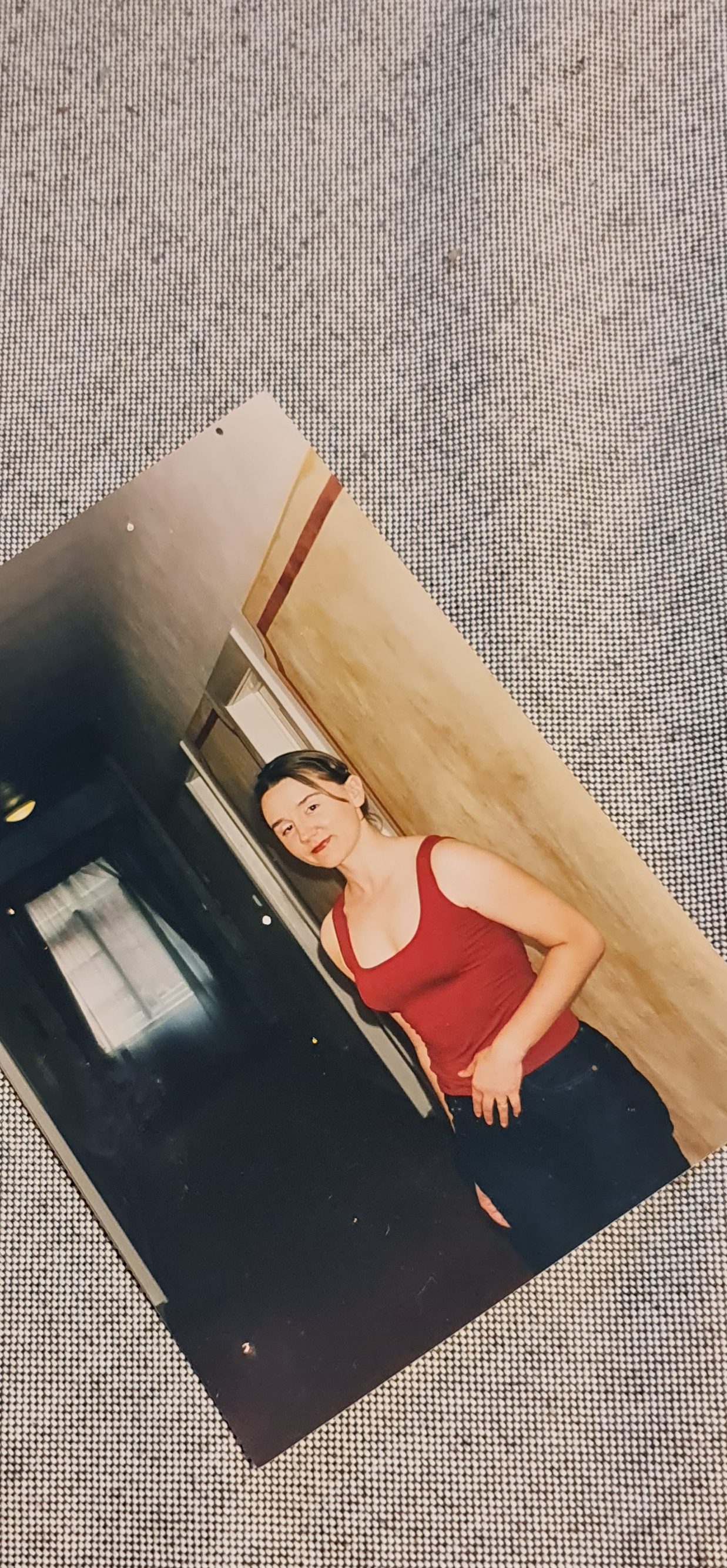
Prague 2002 – years before Lithium entered the chat
I remember the first time I became aware of Lithium. Not the battery kind. Lithium carbonate, the gold standard treatment for bipolar disorder. Especially bipolar 1 disorder. It was before I had a definitive diagnosis. In the murky months after I was introduced to mental illness by postnatal psychosis.
My psychiatrist had said from the beginning that I could have an underlying bipolar disorder, had mentioned Lithium. I rejected this potential differential diagnosis.
We never got as far as Lithium that first time. I was sucked into a rebound depression that spread from dullness to catatonic in days. It was the necrotising fasciitis of psychiatry. It needed more than pills to stop it. A course of 12 electroconvulsive therapy treatments recovered me to the point of being able to go home with my then four-month-old baby.
I fully recovered.
18 months later I gradually came off all my medications and was fine. I risked smugness. So much for an underlying bipolar disorder. My psychiatrist reminded me patiently that I would have to be symptom free for 3-5 years to rule out bipolar disorder more definitively.
I didn’t make it to 5 years. I got sick again with my second (and last) baby 2 years later, and went on to have classic bipolar 1 episodes every 2-3 years.
By the time my psychiatrist suggested Lithium again, I was in the throes of psychosis, delusional and still in the stage of lacking insight common to early episodes of severe mental illness.
I laughed.
‘I’m not sick enough to need Lithium.’
I was convinced I was being offered it as a test, and that to pass the test, I needed to refuse to take it.
Eventually the trust in my psychiatrist penetrated the delusions, and I was persuaded.
It came with warnings. Stay hydrated. It can give you a metallic taste in the mouth. We need to monitor your kidneys, and thyroid, and most importantly blood Lithium levels. Too high and you risk Lithium toxicity, which can be fatal.
The list of potential side effects is long…like for paracetamol. I weighed them against the potential benefits, which included reducing the severity and frequency of my symptoms. Each bipolar episode had left me sifting the ashes of myself through once capable fingers. I was tired of working hard to re-establish my life only to be levelled again and again.
It’s been fifteen years since I tentatively welcomed my first dose of Lithium into my body. It’s not a cure. It is not solely responsible for reducing symptoms. It is a main character in my cast of management tools. I still get sick enough for hospital every couple of years, but not as severely and not for as long.
Lithium steadies me. It leads when I am the autumn leaf, caught in the whirlwind of my special brain chemistry, crunchy and fragile under life’s boot. It steps back when I settle, just a steady presence, swallowed twice daily. Solid ground in the house of my life. I don’t think about where I’d be without it.
It hasn’t asked for too much in return…so far…
Fine, intermittent hand tremors wobble my liquid eye liner. I could no longer perform surgery… if I still worked as a vet.
My thyroid function is compromised. Thyroxine is an easy fix… Even my endocrinologist agrees it is easier to supplement the thyroid than to attempt my life without Lithium.
Individual responses to Lithium like so many psychiatric medications are variable and fickle. I know someone who almost died of Lithium toxicity, many with impaired thyroid function, others whose kidney function meant they weren’t compatible with lithium, or it just didn’t work for them. It’s not for everyone.
My Lithium levels have always been where they should be. I don’t take that for granted.
But then came Thursday last week, and the unwelcome news of elevated Lithium levels. Not rush me off to hospital high, but high enough to have my psychiatrist and I contemplate the house of cards that is my medication regime.
Neither of us like this. We know from experience that even a gentle tug of one card can send my next several months toppling around my ears. So, we agreed to an almost microscopic reduction in my Lithium dose, hoping to bring the levels down without angering my brain into symptom mode. We’ll recheck levels in a month.
My dance with Lithium has been one of many things that have gifted me a beautiful quality of life. Fingers crossed it stays that way.
CW: minor mention of severe bipolar 1 disorder symptoms – no detail
It is World Bipolar Day again. Some years I’ve celebrated and advocated. Others I’ve greeted the day with anger. Others again it has barely registered.
I first became aware of WBD around 2018, the beginning of Thought Food and my training as a peer ambassador with SANE. The beginning of my mental health advocacy era. Over years I have poured thousands of words borne of my lived experience and opinions about this illness into Thought Food. Some perhaps a little naive, but they felt right at the time.
For the last year or so I have had nothing new to say about this slippery illness whose symptoms and response to treatments vary from patient to patient.
But my algorithm made it impossible to forget that WBD is today, and I didn’t feel averse to a spot of writing. So here we are.
My bipolar disorder keeps me humble.
It reminds me I can’t shove myself through brick walls driven by ego and will, the way I did before it joined me.
How do I feel about living with it?
I won’t sugar coat it. My last hospital admission was 6 months ago. Except for a brief period off medication between having my two children, I have been medicated – some would say heavily, but it’s all relative – for 18 years. My thyroid gland has malfunctioned on some of the bipolar medication. Brain trumps thyroid. So, I take thyroid medication to negate the effects of that bipolar medication. I have regular blood tests to monitor other organ systems for compromise from the bipolar medications. If my kidneys take a hit, I will have some big decisions to make. My lifespan is likely to be 10-15 years shorter than the general population courtesy of bipolar 1 disorder, a little less if I manage to dodge suicide.
If this sounds bleak – read on. It’s not all bad.
When I am not symptomatic, which is most of the time, my quality of life sits between good and excellent. I am psychologically healthier than most people I know who don’t live with mental illness. I have worked to get my relationships into good shape. I don’t tolerate toxicity or a lack of self-awareness in those relationships.
I know how much energy I have and where I want to put it, always. Exercise is non negotiable for my health, so I do it and reap the endorphins. For me the idea that bipolar medications stifle creativity is a myth. I fully enjoy my creativity when my brain has been unscrambled by my medication. I am not particularly worried about possibly living for less time because I have the tools to make whatever time I do have great.
In the beginning bipolar 1 disorder threw everything it had at me. Horrifying psychotic episodes, unstoppable mania, catatonic depressive episodes that only responded to electroconvulsive therapy, and suicidal ideations.
I can’t predict what it will challenge me with next, but I have learnt that developing insight into my specific symptom patterns and responding quickly to recognising those patterns when they occur, rather than denying they are happening – as I did in the early years – is key to avoiding the worst ends of the bipolar spectrum.
Early intervention for each episode is crucial. For me that usually means hospital admission to monitor symptoms and adjust medication as needed. My early hospital admissions were often months long. My most recent admission was two weeks.
Now for a bit of advocacy.
If you know someone newly or not so newly diagnosed with bipolar disorder, give them patience. It takes appropriate treatment and support from loved ones to gain initial stability.
In the long term, it also takes hard work and time for the person living with this illness to secure two of the most important contributors to well managed bipolar disorder:
The insight and acceptance to allow them to live with respect for this illness and the space it will occupy in them for the rest of their lives.
CW: Sanism, recent news cycle, mention of violence
It’s been nearly a week and I have intentionally held my horses and my tongue.
The news cycle has generated a flurry of hot takes on the horrific events at a Sydney shopping centre last weekend. It stumbled many times in its race for the truth and now appears to have moved on to fresher fodder.
This week included a first for me. I have wished for a bipolar disorder flare up severe enough to render me unaware of the above-mentioned news cycle. I have craved the security of being in hospital. Usually when I long for the hospital, I am too unwell to be at home.
Right now? I am stone cold sane.
I imagine anyone with a pulse, access to the news, and a shred of empathy has been devastated by the deaths, injuries and trauma that stained last Saturday afternoon. Me too.
I’ve also wished I could find comfort in plunging my head into the sand. However, for now, I am well enough to find that prospect more unbearable than having word projectiles launched at me.
It is easy for me to sink into the comfortable feather bed of my friends, family, and acquaintances who are supportive, who don’t other me, who see all of me. It is easy to feel complacent, to believe that yes things are getting better out there, that we are reducing stigma surrounding mental illness. But things are not getting better when psychosis is in the picture.
The minute the media spewed out the words ‘mental health issues’ and ‘schizophrenia’ in relation to the knife attacks, I braced myself for what was to come. And it came alright. Those words lit a match to the petrol-soaked kindling held by people paddling around in all of the news outlet and social media comments sections.
If you haven’t lived with what I have, you might think – ‘Don’t read the comments. They are rubbish.’
Yes. But they are also a barometer and thermometer. And if you are someone who walks through the world with a severe mental illness, knowing the temperature and pressure of your surroundings matters.
We all come at the comments sections from the launch pads of our life experience.
As someone who has lived experience of postnatal psychosis and lives with well managed bipolar disorder, here is a snapshot of where I come from:
My experiences of psychosis have been the most terrifying of my life. I have dry retched and screamed with fear in the middle of them. And I have been safe and receiving the best care when they have happened.
I can’t imagine how I would have survived, let alone felt, if I had been experiencing this awful symptom, without care and treatment, while homeless, in the throes of addiction, or without the privilege I live with. If I were still alive, I don’t know what path I’d be on.
Over the last 17 years I have written and talked about not only my experiences but the failures of the public mental health system that are at least partially responsible for thousands of people having a poor quality of life when they don’t need to. I have pointed out many times that these failures almost always contribute when tragedy is the last stop on the derailed train of a poorly managed or unmanaged severe mental illness.
I have gone on ad nauseum about stigma surrounding severe mental illness, and the barrier it forms between people who need good care and their ability to access it.
And I am far from the only one writing and talking about it. Yet here we are.
Here I am feeling punched in the gut by two words that popped up frequently in the comments sections this week. One of my most hated pejoratives used to be ‘psycho bitch’. This week ‘psycho bitch’ was toppled by ‘these people’.
‘These people’ is less in your face than ‘psycho bitch’ – but more sinister. Where ‘psycho bitch’ is aggressive, ‘these people’ drips with contempt. ‘These people’ can be applied to any demographic the speaker or writer has a problem with. When I read ‘these people’. I picture the words tripping out of the mouths of people like Pauline Hanson, Adolf Hitler, Donald Trump,
To clarify, this week ‘these people’ in the comments sections was not a descriptor of knife wielding mass murderers. ‘These people’ referred to people – like me – who live with severe mental illness.
And the gist of the recommendations for ‘these people’ was that we should ‘be rounded up and locked away, or burn in hell’ and that we are like ‘vicious dogs who should not be let out in the community.’
While these sentiments frustrate and sicken me, I am not worried about me. I have an accurate diagnosis, access to good care, insight, and know how to look after myself.
I worry about people who are having a first or early experience with symptoms of a severe mental illness, who read this poison when they are alone, who soak it up and believe it to be the truth. This stigmatising language is enough to stop someone who is new to this, or entrenched in a stigma spiral, getting the help they need. This is particularly disheartening knowing that early interventions, especially when it comes to psychosis, give the best outcomes.
Most people who don’t get the help they need will never hurt anyone else, but they are at risk of having a poor quality of life, or not surviving their illness.
And anyone who includes stigmatising language in their vocabulary actively contributes to this cycle of suffering.
Last Saturday’s perpetrator may have been a misogynistic arsehole, capable of violence, regardless of his history of a mental illness.
Or his actions may have resulted wholly from unmanaged or poorly managed long term mental illness featuring psychosis and little help from the public mental health system.
Or it might have been a combination of both.
Most of us will never know.
So, do we need to?
I used to think so.
I used to think that the more detail in reports about a perpetrator’s mental ill health and areas where the mental health system had potentially failed them, the more the public would understand.
But I no longer believe there is any benefit in feeding a baying-for- blood public, click baity snippets or even more detailed information that they don’t appear to have the experience, compassion, or education to process rationally and fairly.
Consistent bad reporting on mental illness and its repercussions hurts vulnerable people. We may as well slide back into that dangerous fertiliser for stigma – silence.
I have written several posts about media reporting and stigma surrounding complex mental ill health over the years. Here are some that you might like to check out:
I know people who don’t consume the news anymore. Others avidly click, swipe, and share and demand the shares be shared and that donations be made.
A sense of needing to ‘do something’ beats like a heart behind our screens.
Some say the carnage and its causes are complex. Others claim it couldn’t be simpler. Meanwhile, powerful, malevolent toddlers masquerading as leaders extinguish lives with their belligerent tantrums. This kind of hellish tit for tat has been going on all over the planet for aeons. There’s nothing new about our news.
The atrocities we were clicking and swiping and enthusiastically sharing and donating to a year or two ago, are far from over. This trauma has not stopped. It’s just not as fresh as what we are fed from further south right now.
While my bipolar disorder sleeps, I choose to neither soak myself in headlines nor bury my head in our (increasingly hot) sand.
I have always struggled to understand warring over a homeland, because (regardless of my genetics, birthplace, or heritage) I don’t identify as belonging to a country or a people. I was taught to be a chameleon, a grateful visitor wherever I go. It has been drilled into the DNA of my family who moved around a lot, who has flight in its history, whose ancestors have done their best not to be in the wrong place at the wrong time.
I don’t believe humanity has quite enough humanity to ever achieve world peace. If we had the capacity to resolve conflict without collateral civilian casualties, we’d have done so a long time ago.
Our individual lack of control over global catastrophes and atrocities can feel depressing. But we can each control how we react to our feelings. Providing we are not experiencing a severe episode of clinical depression, we can feed our sense of hope by turning a microscope on our own lives and surroundings.
Good stories play out near us all the time. I witnessed one on holidays at the beach recently:
A not so gentle day. Dumping waves boiled the water. One after the other. If you got caught up in one of those you became an ingredient in a soup of flailing limbs. A bit closer to the shore we laughed and played in the sea foam bubble bath, eyes always on the incoming, legs resisting the drag out into the angry ocean.
Then to my right a little girl, five or six, began to cry. The wash after a wave swallowed her and spat her back up like an acorn. Spluttering, she looked wildly about. I assumed the woman near her was her grandmother. She scooped up the crying girl and pointed to some other adults nearby. The girl shook her head, sobbed red faced, hair plastered to her head. I just caught the older woman’s words above the rush of water.
‘Can you point to your mummy or daddy darling?’
The girl was crying too hard for speech, too hard to point. This was not her grandmother.
Yet she positioned the girl on one wide hip and purposefully strode away from danger. Finally, where the waves petered out onto the sand, the girl’s father appeared, and a narrative that could have played out so badly, ended well.
While the brutality of the news can suck the happiness out of our heads, good things still exist. And they don’t need to be stories. Simple snippets suffice:
Taking refuge from a storm in a second hand book shop.
Sleeping cats.
A tidy bedroom and a good book.
The sound of cicadas.
Wildlife visitors.
Converting ingredients into a meal.
Having a kitchen to cook in.
A warm hand to hold walking in the summer breeze.
A rainbow, thunder, and lightning occupying the sky all at once.
The clink of ice cubes against a condensation beaded glass, and the first sip.
Clean pyjamas after an evening shower.
Children growing into themselves.
Free will and choice…
When I disengage from my screens for long enough to look around me, snippets appear everywhere.
I have at times been guilty of outrage in response to what my screens feed me.
But, for me, outrage on its own achieves little. It is hot air shouted into a furnace. And it is a luxury I can’t afford or sustain, because ongoing outrage can convert into powerful fuel for a bipolar episode.
On the other hand, deciding to tend the happiness in my own backyard builds the strength to do meaningful things for myself and the wider world.
PS: If you are clinically mentally unwell, then the suggestions in this post to focus on the positives around you apply only if you are well enough to do so. Symptoms of severe mental illness, especially clinical depression, can make it impossible to focus on the positives without more targeted treatments, such as psychological or medical therapies.
For me, a sign that I need more support than the power of positive thought is when I find it impossible to focus on the positive, and guilt and negative self-talk set in, because I’ve failed to appreciate the positive.
Lastly, if I were currently experiencing a bipolar episode I would not consume any news, and would focus solely on recovery.
It’s been two years since ‘Abductions From My Beautiful Life’ was published.
By the end of last year, I’d finished with promotional activities and hoped to relish my freedom by writing something new.
But I entered an uncertain fog. I felt like never writing anything (beyond a private diary) or having anything published again.
Why?
Let’s go back to the beginning.
‘Abductions’ began unwittingly nearly 17 years ago. I was just over a week into first time motherhood, the inside of my head bruised from the battle between psychosis and antipsychotics. I was an inpatient in the Special Care Unit of a private psychiatric hospital, where rooms were stripped of suicide risks and breakfast toast came in paper bags.
I scribbled my first record of psychosis on one of those toast bags. I wrote with no plan. But the words felt true. So, I held onto the bag.
When I returned to finish the Master of Arts (MA) in Writing, Editing, and Publishing (WEP), which I had started before my pregnancy, I sharpened and submitted my toast packet words as part of my final dissertation. My supervisor told me my writing was good, that I should consider expanding it into a memoir.
I took my first nibble of ego boosting carrot and began writing.
I wrote in small, snatched parcels of time in between veterinary work and looking after my daughter. Gradually the manuscript took shape. I had another baby. The postnatal psychosis returned, carrying with it a diagnosis of Bipolar 1 Disorder.
The book was nowhere near finished now.
I slowly navigated my way around the prickly discomfort of living with this illness. I began some mental health advocacy work. Finishing and having my memoir published became the flagship for that work.
When I got too close to be objective, I paid for a full manuscript assessment. The editor gave me pages of specific, helpful feedback and another chomp at the carrot:
‘You have a wonderful manuscript on your hands here. My job is so much easier when the writer can actually write…’
My ego unfurled.
I worked through all the editor’s notes, confident my book would be published.
I became better acquainted with my Bipolar Disorder. Manic, psychotic, and catatonic depressive episodes rendered me too unwell to write or edit for long stretches of time.
When I finally finished, I asked my former MA supervisor if she could take a look at it.
She liked it enough to pass on to her own literary agent, who loved it and offered to represent me.
This easy start fattened my ego further. I believed my hard work was done.
My agent sent my manuscript to publishers across the country. And I entered an era of nibbling at dangling carrots.
The feedback from publishing houses was consistent. The creative departments were enthusiastic: ‘It’s beautifully written, and an important story that needs to be told.’
Always followed by equally consistent (and devastating) feedback from the financial departments.:
‘It is an important story that needs to be told. But it is not commercial enough for us.’ (ie it won’t sell). ‘Best of luck.’
At one point my agent suggested cutting 10 000 words. I carefully trimmed 10 000 words. It made no difference.
After 18 months of coming close often, but ultimately always being rejected, my agent had exhausted her contacts.
I sent it to publishers who accepted unsolicited manuscripts. Some took six months to reply:
‘It is beautifully written, but not commercial enough for us to publish. Best of luck.’
I’d now come too far to give up. I was looking into self-publishing when my algorithm served me another publisher who accepted unsolicited manuscripts. I thought: ‘Nothing to lose.’ and uploaded my baby.
They replied quickly. They liked it, but also felt it wasn’t commercial enough for them to publish under a traditional model.
However, they offered me a ‘contributary contract’. This meant I’d contribute to some of the cost of publication, and they would provide all the services of a traditional publishing house including editing, copy editing, cover art, ISBN registration, printing, and marketing.
I considered my options. My research into self-publication had so far shown that it could be more expensive than the contributary contract. I also reasoned that I wouldn’t need to outsource the steps between manuscript and published book with the contract.
By now my first words on a toast packet were 12 years ago. I was so thirsty for the end of this road filled with carrots and mirages.
I signed the contributory contract.
I floated on relief.
Covid came. Progress was slow, but I was just happy ‘Abductions’ finally had a home.
My first inkling that all was not good landed in my inbox with the publisher’s cover art suggestion – a grotesque image of a woman’s face half smiling in colour, half miserable in black and white.
It was so far from appropriate (let alone good) that working with the publisher to come up with something better, felt impossible.
My friend Sarah put me in contact with her friend Jerry, a talented freelance designer, who worked with me to create a beautiful cover for ‘Abductions.’
For a while it all seemed to be coming together.
But when the publisher sent me my supposedly print ready proofs to sign off on, unease tinged my excitement. I was expecting more edits, specifically copy edits, before this stage.
Within the first ten pages I found typos, extra spaces between words, inconsistencies. Enough to discredit the quality of the writing. I pointed out the errors and asked the publisher to properly copy edit my manuscript.
The publisher returned my manuscript stating again it was print ready. I found more errors. We reached a stalemate. They wouldn’t copy edit it and I would not sign off on a manuscript that clearly hadn’t been copy edited.
Increasingly anxious, I finally looked online and found accounts of other writers being exploited by this same publisher, a vanity publisher with a terrible reputation.
My ego imploded.
I don’t cry often. That night I didn’t just cry, I howled.
I wanted to wrench my book away from them.
I weighed my options. Pull out, haemorrhage more money and my mental health into a lawsuit and then self-publish or find an independent copy editor to do the work my publisher was meant to do, but get it published this decade.
I choked down bitter, thorny pride and found and hired Linden, a free-lance copy editor.
My suspicion that the publisher had neglected to copy edit my manuscript was proven by Linden’s meticulous work. She found hundreds of errors in her copy edit.
I checked and track changed them all, nauseated by having to read my 90 000 words for the thousandth time.
But I finally felt confident that the manuscript was as good as it could be. I signed off on it and was given a publication date of 30 April 2021.
Worry stalked me after my signature. I was now 14 years on from my toast packet scribbles, and not confident my book would be published.
Yet, a month later a box of books arrived, swathed in bubble wrap and new book smell. ‘Abductions’ had been born against the odds.
Predictably my publisher did no marketing. So, I organised what I could myself.
I celebrated ‘Abductions’ over self-catered book launches with people I knew and loved who brought people they knew and loved.
I sent copies to media outlets, and podcasts, and submitted it to be considered for writers’ festivals, mostly with no responses.
I gave author talks and readings to hospital patients, staff, and nursing students at Belmont Private Hospital, where much of ‘Abductions’ is set, and copies were sold at reception.
I successfully applied to have it stocked in Brisbane City Council Libraries and did a series of library talks. It made its way into a street library in my neighbourhood.
I spent a delightful evening with a local book club who had recently read ‘Abductions’.
I met Kath, a local jewellery designer, at one of my book launches. She wrote me a beautiful letter after reading ‘Abductions’. and offered to display and stock copies for sale in her studio.
I began to receive positive feedback from friends and strangers.
I approached a couple of local independent book shops about stocking ‘Abductions’. One refused to deal with my publisher but was happy to accept a small consignment of books directly from me.
It was a scorching reminder that I could lose readers before they even picked up my book because of my publisher’s bad reputation.
About a year ago I received a long email from a stranger.
It detailed everything they thought was wrong with my writing and my book. There was nothing constructive about this nail bomb of words. They followed up with some equally wounding public Amazon and Good Reads reviews. This semi-troll’s snide references to my ‘vanity publisher’ were a glowing hot poker shoved sizzling into my vulnerability.
I could follow my Gen X instinct and say that in the scheme of my self- shattering Bipolar episodes, publishing woes and word nail bombs are fairy floss flimsy. But that’s a glossy sentence slapped over the bumpy truth, a neat simplistic, disingenuous bow to suggest that just because I’ve experienced objectively worse things, any lesser hurt is harmless.
If that were true – why am I still smarting?
Getting ‘Abductions’ published has thickened my skin and given me a good dose of humility. And regret can’t exist alongside the beautiful messages from readers that I’ve filed away to remind me it’s been worth it.
But it has also been exhausting, disheartening, expensive, and filled with the shame of being duped by an exploitative vanity publisher.
And ultimately, all the publishers who rejected my manuscript for not being commercial enough were right. The bookshops sold none of their copies.
So, on a recent sunny Saturday morning I collected my unsellable books. The weight of their pristine pages pressed me for a future.
I looked up and down the long street.
At one end people with no roofs, shouted with alcohol or madness or both and felt the sharp winter wind whip over their bare, calloused feet. At the other end people dressed in privilege, held their madness close to their skin as they sat clustered in trendy cafes.
No neat endings. But I suddenly knew these books weren’t coming home with me.
As I walked, I scattered my little rejects randomly on benches and stone steps. And I loved the freedom of not knowing their destiny. Read, unread, loved, hated, soaked by rain, burnt for warmth, or used as toilet paper.
By the end of the street my hands were free, and I felt lighter.
In the beginning ours was an abusive relationship. Bipolar 1 Disorder entered my world by clubbing me over the head and dragging me away from myself and my life. There was no informed consent. No polite knocking at my door and asking ‘Are you ok with this invasion? Are you ok with me setting up camp in your head for the rest of your life?’
That first time, it committed horrendous crimes. It stole my most prized possession. All my control. It obliterated my reality, snatched me away from my husband and baby, sped me up and then poured concrete over me. I was convinced it would kill me…
But it didn’t.
When I finally kicked and screamed my way free, I sat panting on the other side of it, scraping all remnants of it out of my brain and off my skin, I vowed never to let anything do that to me again. This was the first and last time. I knew better now.
I knew nothing.
When my doctor told me it was unlikely that this would be my last encounter with it, I nodded but didn’t believe him.
It came, not immediately but in roughly two-year intervals again and again and again. When the early signs of those first recurrences nudged and poked and then slapped me in the face, I turned my back and raged ‘No, no , no this can’t be happening again!’
My denial fed the power it had over me to super levels.
I tried to fight it with sheer will and my bare hands grabbing at the invisibility of it. It laughed and continued to snatch my sanity, drop kicking me into hospital sometimes for months at a time.
In the face of this illness my denial was a house built of dandelion seeds.
Eventually a sliver of acceptance crept in. But only while I was sick. The moment I regained myself after each episode, I ran back into the arms of my previous life. Working and doing and being who I was before all of this. Driven by a need to prove to the world: ‘See I live with this illness and can still do it all!’
I can…but there is a cost.
In 2015 it broke me. It locked me in a torture chamber and made it clear that it was going nowhere. I sped into a brick wall, lost my reality, lost my living brain, had to have it shocked back into a feeble beginning again and again.
I limped away finally understanding that we were shackled together for the rest of my life.
I told my psychiatrist: ‘I don’t know what to do, I can’t keep doing this!’
He paused, then said:
‘Perhaps you have to learn to take this illness as seriously when you are well as when you are unwell.’
He was right.
By then I had learnt to pay lip service to my management of this illness when I was well by diligently taking my medication, living relatively healthily, taking care of sleep etc, But I had not mentally accepted that I live with Bipolar 1 Disorder every day, whether I am well or not. I had made the easy, obvious choices, the choices that have become second nature, like exercising and taking my medications.
But it has taken much longer and been harder to make the longer-term decisions that are just as much a part of looking after myself. Decisions like how to work and what is worth pursuing and weighing up the price I might pay for stress. Things I had the luxury of never considering before.
Fighting acceptance hasn’t served me well. Denial can damage me easily as much as the illness itself.
I have learnt acceptance is not giving up. Acceptance also doesn’t mean that the next time I get sick I will feel nothing but saintly calm. The unfairness of being yanked away from my life with no notice will still sting and ache.
I no longer leave this disorder behind in the rear vision mirror after each episode. It stays in my peripheral vision. But, the less I fight it, the milder the rope burn from being tethered to it.
It doesn’t define who I am, but I no longer expend energy proving it is not part of me. Because it always will be.
You may also like to check out the following posts:
Michael and I met in our last year of high school. We were friends for over a year before we started going out. I remember why my feelings for him inched across the border of just friends. He was sure of himself, but not arrogant. We never ran out of conversation. He made me laugh.
I kissed him at a service station one night after driving around for hours talking. He kissed me back. I carefully considered my options for another six weeks. And then I chose him over the dying dysfunctional dalliance that had occupied me for the previous couple of years. I chose him over two other Uni boys who had nervously asked me out. I chose him over staying single because I sensed I’d regret not giving us a chance.
For as long as I can remember I never wanted to get married or have children, and I told Michael this repeatedly in the early years of our relationship.
We may have started going out when we were young, but we chose not to shackle ourselves to each other just because it would have been easy. We consciously followed our own paths.
After university we lived at opposite ends of the country for a couple of years. A year of FIFO (Fly In Fly Out) during which Michael worked 28 days west of Mt Isa and flew to Adelaide (where I worked) for his 7 days off. It was hard, but not nearly as hard as the following year of him living in Brisbane and me living in Adelaide. The long distance nearly broke us.
It took those couple of years for me to unclench from my outdated determination never to marry, to recognise it would be my loss to say no to his quiet proposal on our sofa bed one aching night before he headed back to Brisbane from Adelaide.
I knew when I said yes that he was secure enough in himself for us to be co-pilots in life.
When we married eight years after we started going out, our eyes were wide open. He knew he wasn’t getting a wife who would have his pipe and slippers ready for him when he got home from work. And I was never blinded by a desperation to get married and procreate. So, I never set up the toxic precedent of taking on all the housework and mental load.
For the many years I worked in small animal veterinary practice he had dinner and a listening ear ready at the end of my long shifts. The patience, kindness, and strength he showed me in the first thirteen years of our relationship made me reconsider my stance on children. If he hadn’t, I would not have chosen to have any. We didn’t have our first child until six years into our marriage, after we’d travelled together, after we’d each established our careers.
Neither of us could have predicted that parenthood would bring so much more chaos than the usual amount a newborn brings with them into our carefully considered lives.
Some things you don’t get a choice in.
Neither of us chose the episode of Postnatal Psychosis that hit me on day seven, that landed me in the special care unit of a psychiatric hospital while he took our daughter home. And that was just the beginning. We are living the rest of our lives with my eventually diagnosed my Bipolar 1 Disorder.
When people hear about my experience of severe mental illness or even just when I don’t relate to being buried under our family’s mental load, some tell me I am lucky to have my husband, lucky he has stayed, lucky he is so supportive.
It’s patronising.
I am not Michael’s charity case, and he is not my carer. Him not leaving me doesn’t make him a saint or me lucky.
The survival of our marriage has nothing to do with luck. It has everything to do with making a good choice in each other, and doing the work when things are hard.
This ongoing informed decision making doesn’t confer immunity against a future break up on us, but it does mean we aren’t currently sleepwalking through our marriage or wallowing in decades of resentment borne of drifting along in an uncommunicative, stagnant comfort zone.
I am lucky in many aspects of my life, and I don’t take this for granted.
Among a lot of other luck – I am lucky my husband wasn’t chosen for me and that I am not in a relationship with someone who is violent or coercively controlling. I am lucky my fertility was good when I finally decided I wanted children.
And yes, luck brought Michael and I into the same place at the same time.
But in the 32 years since then it is not luck but many conscious decisions that have led us from the right place at the right time to sharing our lives today.
I have never been so grateful to smell cat shit in my life.
But let’s add some context for that sentence.
A few weeks ago, I went out for a friend’s birthday dinner in a small, busy restaurant. Indoors, noisy. There was a lot of leaning in and speaking loudly to hear and be heard. Within a couple of hours, tongue bitten from sitting across from someone who told me they didn’t believe Covid vaccinations had been sufficiently tested for safety, I was ready for home.
Three days later tiny terrorists held me hostage in my room. I was tethered to my bed by sticky tissues and vicious spike proteins digging in to my respiratory tract. Sick, but not my usual sort of sick. I cancelled plans for the week ahead as Covid leapt through the family. And I marvelled at how easy it felt compared to cancelling things for a Bipolar hospital admission. In 2023 everyone can relate to Covid cancellations.
Prior to contracting Covid, the things I was most concerned about, should I be infected, were likely to be things of no concern to most people. I am grateful I don’t live with any type of immunocompromise or chronic respiratory condition. Neither does anyone in my family. And yet I have continued to wear a mask to the shops without caring what people think.
Because I am vulnerable to collateral Covid damage.
Anything that potentially interferes with my sleep or ability to exercise increases my risk of a Bipolar episode. Covid does both. Then there is long Covid. The stress of living with this nasty reality would skyrocket my risk of multiple Bipolar episodes. And then there is losing my senses of taste and smell. As someone who begins to feel depressed if these senses diminish with a cold, the prospect of potentially losing them long term or permanently was horrifying.
I imagine everyone values their senses differently. When it comes to reasons to breathe, I am someone for whom smelling is as important as oxygenation. I don’t mean I am someone who just appreciates nice perfume and the smell of freshly ground coffee – although I do.
I am also someone who knows the smell of my husband’s sternal notch, the dip between his collar bones at the base of his throat. It is an olfactory hug, a smell I could pick out of a line-up of other sternal notches.
I know the softest fur behind my kittens’ ears smells of butter and air. The smell of garlic sizzling in olive oil or a chocolate cake just ready to be taken out of the oven are pure dopamine hits for me.
So, when Covid blindfolded my sense of smell on day five, and in doing so kidnapped one of my greatest sources of joy and information, I panicked…enough to google how long this was likely to last. It can be as little as five days…but sometimes this black out lasts for 6-12 months or is permanent.
This loss of smell was not like the kind I’ve experienced with a head cold. It wasn’t associated with nasal congestion. My nose was clear and breathing air in a world apparently devoid of all scents and odours. I realised quickly that aside from the discombobulation and depression of living with no nose, there were practical difficulties. Sniffing potentially spoilt milk – nothing. Toast burning to charcoal – nothing. A rotting potato decomposing in a black pool of noxious liquid at the back of the potato storage drawer – totally undetected.
Without smell to accompany it, my sense of taste was reduced to only being able to differentiate sweet from salty foods.
I began to bargain in my head. Which of my other senses would I give up in exchange for my sense of smell? Impossible. I don’t want to lose any of my senses.
Thankfully, for me, the blindfold loosened within ten days. I began to smell around the edges of the world again. Strong smells returned intermittently and then faded away again. The fading times lessened. I discovered the foul stench of the decomposing potato that had been reverse air freshening the kitchen for at least a week. Cat shit re-entered my nasal vocabulary. And with time so have the subtleties of air and butter on kitten fur,
As for the Bipolar risk factors that accompany my visit from Covid, I’ll have to wait and see. The last couple of months have carried other stressors with them too. From experience, my Bipolar episodes tend to sit back patiently while the risk factors peak and the stress unfolds, and then set in as a special treat once things settle down.
So I am moving carefully through the world with my fingers crossed, while I enjoy being back in the world of the smelling.
And when anyone around me does, even if it’s about their own experience, I feel as though I am trapped in a cube of thick glass, a scream frozen in my mouth.
I’ve wanted to write about why I feel this way for a long time but have discarded the topic again and again. I know many people use humour to help them live with their mental illness. But I’ll come back to that.
Onto my reasons for not being able to take these jokes.
At its simplest, I don’t believe we have eradicated sufficient stigma to safely joke about what living with a mental illness means.
It might look like we are making progress, but it’s an illusion.
Sure, our baby steps skim the surface of the most palatable mental illnesses. Anxiety that resolves with mindfulness, or depression that is sorted with some exercise and early morning sun exposure.
The ‘brave’ disclosure of taking (a respectably small amount of) medication for anxiety or depression, has shed a lot of stigma in recent years.
But dive below the surface and things get uncomfortable for many. Think psychosis, psychiatric hospital admissions, Electroconvulsive Therapy etc.). The world still largely deals with this discomfort as though it is a teenager trapped in a car with a parent talking sex education. Sulky silence, avoiding eye contact, and wisecracks.
Then there is the constant energy sap of explaining.
Let’s take some experiences I’ve had recently.
First came the media requests for my opinion on whether Kanye West’s antisemitic hate speech, racism, and misogyny were caused by his bipolar disorder. You can find my responses here:
Suffice to say I wasn’t laughing as I wrote and spoke.
Next it was a question at the end of the Q and A for one of my library author talks about my memoir, Abductions From My Beautiful Life.
‘Hi, I’ve read your book. I noticed there is no violence in it. Is that true?’
I asked, ‘What do you mean?’
‘It’s just that whenever you read about people with mental illness, they are always violent. So, I was surprised not to find this in your book.’
An ache swamped my chest. Everyone in the room waited for my answer to this jagged question.
I explained that the media often stigmatises mental illness by reporting violent outcomes devoid of context or humanity. I explained that, yes violence occurs, but the mentally ill are more likely to be victims not perpetrators. I explained that when someone’s violence is rooted in their mental illness it is too often not a case of them slipping through the cracks. It’s a case of there being more cracks than solid ground.
And that no I have not edited any violence from my book. Aside from the violence psychosis visited on my brain, there wasn’t any.
I was thanked for my explanation.
But it shouldn’t take me or anyone else to explain that most people who live with severe mental illness are not violent, antisemitic, misogynistic, racists.
While I am well, I choose to explain it again and again and again, because silence leaves a space for the public to draw their own conclusions when Kanye behaves badly, or poor journalism demonises the vulnerable. But the constant explaining leaves me with no energy to laugh about any of it.
When I can, I push back against memes and social media posts that joke about my worst nightmares, or even just sprinkle stigmatising language around like poison disguised as fairy dust. ‘Psycho’ ‘nuthouse’ ‘mental’…
When I point out these ‘errors’ in the comments sections I am often told I can’t take a joke’. I’m told to ‘get a life’ ‘lighten up’, ‘fuck off’, or that ‘it’s just a meme’.
And when I am not well enough to push back and explain, the world continues to fill in the blanks, and papers over its discomfort with another meme.
So, does anyone get to joke about mental illness?
In my opinion:
If humour surrounding mental illness is part of a private conversation between people with lived experience who share enough history to gauge what is appropriate, I have no problem with it.
If you live with a mental illness and find being humorous about your experience is helpful to your recovery and maintaining stability, go ahead…
But have the grace to acknowledge you don’t represent everyone. Consider whether your jokes hide self-stigma. And if you choose to share your humour publicly, ask yourself if the benefits to you outweigh the risk of potentially generating more stigma.
Also – if you share jokes or memes online that perpetuate negative stereotypes around mental illness – don’t tell me to ‘lighten up’ when I call them out.
Lastly – If you have no lived experience of mental illness, don’t joke about it.
As long as the status quo assumes that the perpetration of violence and mental illness go hand in hand, we are still lightyears away from a point when everyone can laugh safely.
I don’t have 800 articulate words tied up in a neat bright-side bow in me today. So this instagram post it is. For context I am now into into my third week in hospital. Some of the manic symptoms are settling. The caption accompanying this instagram post is:
The symptoms are horrible, but it is never just about the symptoms. The symptoms and connotations severe mental illness carry with it. leave me staring at the rubble of my identity during and in the aftermath of every episode. It is never just about the symptoms…





 Thought Food