When Covid-19 And Bipolar Recovery Collide With Unexpected Results

20200301_123742

I have spent the last five weeks in a psychiatric hospital for management of a Bipolar 1 Disorder episode.

I am no longer sick. But still fragile. Like an egg without its shell. I always reach a point on the return to wellness where I can get no better in the controlled bubble world of the hospital. A point where staying longer is of no benefit and can even become detrimental.

I ventured back out into the world at the end of last week. A world that hasn’t grown any softer in my absence. It is the same hustling harsh, bruising, breaking place it always has been, but perhaps more so. No one was fighting over toilet paper five weeks ago.

That said, after any admission for a Bipolar episode, jumping back into my life can feel like steel wool on newborn skin in the early days.

No one can tell by looking at me when I leave the hospital that I need rehab and resilience building before I am ok again. For me, on average that takes the same amount of time I was hospitalised for. So, in this case – another five weeks.

People tend to be congratulatory about me being well enough to come home. I don’t want to be a downer. I am grateful to be home. But just because I’m out of hospital it doesn’t necessarily mean it’s over. It can look like it is slinking away not to be seen again for a couple of years. But appearances can be deceiving.

Once, this illness spent a whole year of my life bouncing me in and out of hospital so often, I got dizzy. By the end of that year, in which most months had held a hospital admission for me, it had nearly killed me. So, that’s why I don’t think about exhaling as soon as I am home.

Today is my fourth day at home. I am still acclimatising. But I also recognise something unexpectedly positive borne of the last five weeks.

Being in hospital with Bipolar symptoms has prepared me for the Covid-19 headlines very nicely.

I get a sense from these headlines and the empty toilet paper and pasta aisles in the supermarket that many people are panicking, or at least are very worried by the uncertainty they are being force fed right now.

I am still in the mindset it took to get through my last five weeks. I lived that time (and do every time I go into hospital) in two-day increments. Why? because it is pointless to look or plan any further ahead. Neither I nor my psychiatrist could fortune tell what would happen. Five weeks of observing, tweaking medication or not, and then waiting another two days before assessing again.

To be clear, there is a difference between not taking something seriously, and choosing to engage only in what is in front of you. I take my Bipolar Disorder seriously, especially when it flares. But does that mean it would be helpful to spend my entire admission panicking that this is the time I become a permanent inpatient (they exist)?

Or should I break it into chunks the size of a couple of days and hit repeat, until at some unknown time in the future I am out the other side?

I’ve spent early admissions, years ago, engaging in the first option but have learnt that the way through with the least energy wasted is the second one.

In the same way, I take the Covid-19 pandemic seriously. But you won’t find me panic buying or worrying about whether or when it will end. Breaking this issue down into two-day increments feels helpful to me right now. Every two days (or sooner if the headlines change dramatically) I reassess the basics: Do I and my immediate family have enough food, water, medication and accommodation for the next two days? I am fortunate. So, far the answer has been yes.

Is there any point in trying to predict what might happen next month or even next week, and worrying about it?

None!

Because no one knows where we will be then. You can only act on the information you have at the time.  And if right now your basic needs are met and you are well, don’t buy more and more and more food or toilet paper (unless you are doing it for the vulnerable members of our population).

Breaking the overwhelm of a difficult situation with no known endpoint into smaller portions lessens the strain on our mental health and preserves our energy for more productive tasks.

And if we do it often enough that’s what will get us to the other side of this situation too.


You may also be interested in:

What a mental illness can teach you about your mental health

Where’s Your Comfort Zone?

Interruption To Regular Programming

Update 27.2.2020


Update 27.2.2020

focus photography of sea waves
Photo by Emiliano Arano on Pexels.com

And so, we enter week four in hospital.

I emerged from the manic symptoms about a week ago. Pummelled into exhaustion by the high doses of Lithium and antipsychotic medication, and by the manic episode itself. Even in a hospital setting, taking all the right medication, and having good insight into the symptoms, manic episodes accrue a negative energy balance. It means when you eventually recover you are depleted, bone tired.

And this is where it gets tricky:

That exhaustion can mimic rebound depressive symptoms. One improves with rest and dialling back the antipsychotic medication. The other progresses beyond exhaustion to include other insidious signs that envelop you in a black, poisonous mist. Appetite drops off. The words ‘zero fucks left to give’ cast in a concrete block take up residence in your skull. Motivation evaporates and has to be faked until it decides to return in its own sweet time.

For a week now my psychiatrist and I have been watching and waiting. At first, we were both hopeful. We even (stupidly) dared to imagine I could be well enough to discharge by the end of this week. There is a reason we have a policy of never looking more than two to three days ahead when I’m in hospital. It’s because this illness has taught us – there is no point.

My psychiatrist entered my room mid morning today, looked at me back in bed and said

‘This isn’t good. You’re usually out walking.’

I turned towards him.

I don’t like it when his face arranges itself into concern within ten seconds of seeing me. It confirms what I already know. It also reassures me, because it is evidence of how well he knows me.

I have tilted towards depression, in the opposite direction to where I was headed when I was admitted.

This means we change our treatment plan in the opposite direction. We will cut back the Lithium and we will increase one of the two antidepressants I take. We will give it two or three days.

UNLESS…

My mood begins to shift back up before then, in which case I will inform the nurses and they will page my psychiatrist for further instructions. We don’t want to risk another ascent into mania. I’m not reaching for a YoYo or rollercoaster metaphor here, because they both imply the possibility of fun, which this decidedly is not!

The other switch over is the behavioural management of active Bipolar symptoms. For me it means telling myself to do the opposite to what my body wants me to do. So during a manic episode I should seek out quiet environments, be on my own, try not to overexercise. During a depressive episode it means kicking myself out of bed, engaging with others, and above all else exercise, exercise, and then exercise some more.

What a mind fuck.

While I continue to wait out my life in two to three day increments, I don’t feel inclined toward gratitude. But that’s largely depressive symptoms talking. So, I will do the opposite and stubbornly find something to be grateful for. Here we go:

I am grateful that at their current level my depressive symptoms are much easier to manage and tolerate than my manic symptoms were. The intense manic irritability has disappeared, and my concentration and short-term memory have mostly returned…for now.


You may also like to check out:

Interruption To Regular Programming

Misunderstood Mania

Mental Illness Doesn’t Respect Deadlines

Visiting Someone In A Psychiatric Hospital?

What a mental illness can teach you about your mental health


These Fires


20200105_212619-1

Are racking up an invisible bill.

Most would agree that even just seeing the billowing smoke, the hellish glow, buckled tin roofs, smouldering ash, the ghostly silhouettes of dead animals lining the roads into obliterated small towns, even when viewed from the safe parts of the country and the globe, even when the horror is confined to a steady scroll behind a screen, is overwhelming. The helplessness bruises our emotions. We can be forgiven for making a donation, posting something derogatory about our inept prime minister and then switching off our screens for a bit.

For the fire fighters, the people in masks in boats under those bloodied skies there can be no thought other than surviving one hour or minute to the next. The same goes for the emergency services, the army personnel, those with loved ones in the danger zones, those who have lost loved ones.

But what about the rest of us. Yes, we can donate to the Red Cross or Celeste Barber or any of the other funds set up to try and help deal with this unprecedented crisis. We can go shopping and buy things on a list that are needed by the emergency services.

But then what – what to do we do next?

Continue reading “These Fires”

My Sliding Doors Encounter With Our Public Mental Health System

Inked20171212_082951_LI

Have you ever had a moment when your answer to a question determined whether your life imploded?

I have.

It came five days into parenthood. I was lying on the floor in my maternity hospital room crying because I was trying to outrun a jaguar chasing me towards a cliff. Things were starting to go very wrong in my brain.

In the following months, when my mind warped and writhed in the grip of psychosis and later catatonic depression, and when what started out as postnatal psychosis turned out to be a first episode of bipolar 1 disorder, I could not imagine things being worse.

But they could have been.

Continue reading “My Sliding Doors Encounter With Our Public Mental Health System”

Visiting Someone In A Psychiatric Hospital?

BCPND visit 2010
2010 My daughter visiting her little brother and I in the mother/baby unit of the psychiatric hospital

‘My daughter never visits me in hospital. She doesn’t like this place.’

An elderly woman told me this in a private psychiatric hospital several years ago.  Sadness dripped from her words.

The thought of visiting someone in a psychiatric hospital (especially for the first time) can leave people feeling: Awkward. Uncomfortable. Fearful. Repulsed. Guilty. Ashamed. Misinformed. Unsure. To name a few.

What do you say and do if that’s you?

Continue reading “Visiting Someone In A Psychiatric Hospital?”

My Mental Health Toolbox

PWC keynote image

This week I had the pleasure of giving a keynote address for one of the departments at PWC (Price Waterhouse Coopers). As part of this I ran through some of the things I have found helpful to help me monitor and manage my mental health.

I got some really positive feedback after the presentation and requests for the list of things that help me with my mental health. So I thought I’d share that list as a post here:

EARLY WARNING SIGNS AND INSIGHT:

In this context insight is the ability to identify early signs of mental ill health in yourself. This is much more challenging than it sounds, because signs of mental illness can masquerade as normal feelings and emotions.

For example – irritability and sadness are part of the normal spectrum of human emotions, but if they are overwhelming and persistent and interfere with normal functioning, they can also be symptoms of depression.

It can take time to identify their intensity or persistence as abnormal. The other challenge is that when we are well, we can often think our way out of sadness or irritability. But when they become symptoms that is impossible.

Someone affected by symptoms of a mental illness can no more think their way out of them than someone with a nasty case of gastro can think themselves out of their vomiting and diarrhoea.

But whereas vomiting and diarrhoea are obvious signs of illness (both to the person experiencing them and everyone around them) it takes insight to recognise when symptoms of mental illness emerge.

For me early warning signs can be an inability to sleep even with a lot of medication, intense irritability, and poor short-term memory and concentration.

Early warning signs are different for everyone. By learning what ours are we can be proactive about seeking help rather than waiting for symptoms to worsen.

For further reading on an example of insight into a depressive episode you can go to: Razor Blades In Mud: Laziness Or Depression?

Continue reading “My Mental Health Toolbox”

Who Holds You When You’re Broken?

20170702_192834

I’ve been told the first time we met I was shuffling slowly up and down a blue carpeted corridor. Slumped body. Empty eyes. I barely registered being asked how I was with a slowly exhaled

‘Not so good.’ before moving on with my pram.

I say ‘I’ve been told’, because I don’t remember our first meeting or the following weeks. I was sicker than I’d ever been. Not many people would have repeatedly made friendly conversation with someone as unresponsive as I was.

She did. At a time when she wasn’t well herself.

When I finally re-emerged after several months of illness, I was delighted to find I had a new friend. A friend I never would have met in my geographical or professional circles. A friend who, like me, had spent the early months of first-time motherhood in a psychiatric hospital instead of at home.

Continue reading “Who Holds You When You’re Broken?”

2018 – The Year I:

Thought about homelessness, after I witnessed displaced people with cardboard placards to explain their belongings smudging the busy and important streets of Sydney in the first days of the new year. My emotional barometer flicked between pity, sadness, relief, and settled on horror because this could still be me one day. The Right To A Home

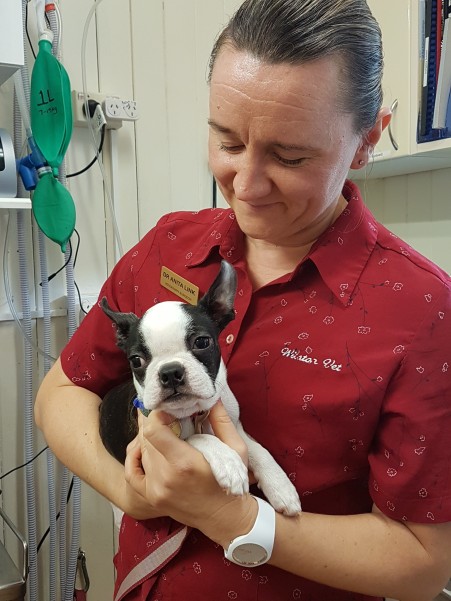
Went to work. After twenty years the neural pathways for running a consultation competently and compassionately, for reading who I am in a room with, and being a shock absorber for their anxieties and concerns, are so well-worn they are almost automatic. Contrary to popular belief (and this photo), we spend much less time playing with puppies and kittens, than we do using our communication skills to explain, empathise, and advise our way to the best outcome for our patients via their owners.20170619_130857

Felt it come for me. In February, over two days. My sanity stepped into quicksand. Mania swallowed me. I called into work sick. I said goodbye to my family. I went into hospital. Battened down my hatches and prepared for the usual long stay. Only to be pleasantly surprised. Four weeks in hospital. That’s short for me.

Lost my job. I do every time I get sick.

Opened new neural pathways by setting up a website, which enabled me to write and publish this blog. My technological ineptitude is boundless, so the existence of Thought Food is a minor miracle.

Supported three men. All stepping through the sticky tar of depression at some point this year. All blindsided by the ferocious nature of this beast. All strong, kind, intelligent, undeserving.

Exercised most days. Ate green vegetable omelets for breakfast some days and Nutella on toast with mug loads of coffee on others. #NotFitspo

20181030_203726

Welcomed Clarence, our baby Stimsons python into the family. He is the lowest maintenance pet I have encountered. Gentle, inquisitive, and only needs to be fed every seven to ten days.

Continued to receive rejection after rejection of the manuscript for my memoir from publishers via one of the best literary agents in the country. Each one stings. Each one frustrates. According to publishers’ feedback the quality of the writing is great, but it’s not commercial enough. In other words: No one wants to read about psychosis if you haven’t killed someone in the throes of it or at the very least been picked up wandering the streets nude and ranting.

Began considering self-publishing the manuscript for my memoir.

Climbed back into some weekend work.

Heard my mother’s voice tell me my father had nearly died after a massive heart attack. Seeing him on day two after triple bypass surgery, comatose, tubes and wires snaking in and out of him, and the comforting blips and beeps and numbers flashing on familiar screens was easier than seeing him on day four, awake, in agony with each movement. He survived. My Father’s Heart Broke

Applied for, was accepted into, and completed the SANE Peer Ambassador training program. The glow of being in a room with others who went through hell, survived, and are now well enough to use that experience for good, still warms me. And I finally feel I’m not advocating on my own anymore. The Chosen Ones

20180922_135548


Gathered friends for dinners and lunches to enable my love of cooking, baking, great food and wine, and conversation…so much conversation.


20180831_215803

Became familiar with the inside of an ambulance courtesy of seven night time trips to hospital in ten days. My son developed partial seizures lasting up to ninety minutes each. Relief flooded me when his MRI scan was clear (of brain tumours) and he was diagnosed with benign rolandic epilepsy (infinitely more manageable). Lessons For A Control Freak

Clung to small wins amongst the manuscript rejections. Three posts published on Mamamia, one on SANE, and a submission for Dr Mark Cross’s book on anxiety accepted.

https://www.mamamia.com.au/mental-illness-language/

https://www.mamamia.com.au/symptoms-of-postnatal-psychosis/

https://www.mamamia.com.au/signs-of-depression/

Narrowly avoided a second hospital admission in October. I pounced on the onset of a depressive episode with an emergency psychiatrist appointment, a medication adjustment and slashed away all commitments except exercise for several weeks. Razor Blades In Mud: Laziness Or Depression?

Became a spokes person for the Australian Genetics of Bipolar Disorder Study, and suggested edits to make the language in the main study survey more consistent and less stigmatising. Most of my edits were approved and included less than twenty-four hours before the study launched. A clip of some of my participation and how to participate in the study can be found here:

https://www.geneticsofbipolar.org.au/hear-from-study-participants-alex-anita/

Attended my first ever non-veterinary conference: ‘Empowering online advocates’ and came away feeling much more hopeful than the trip to Sydney in January had left me. #HealtheVoicesAU

20181116_221734

Discovered the joy of camping, absolutely enabled and enhanced by beautiful friends who supplied (and set up) most of the gear.

Resigned from veterinary work. Ostensibly to stop straddling several worlds and free up more time and energy for writing, mental health advocacy, and my children. That is all true. But I am also bone crushingly tired of the cycle. Work, get sick, lose employment because the nature of my illness means I can’t give a date when I’ll be well enough to return, and I can be sick for months. Then I clamber my way back into a demanding profession you can only inhabit when you are functioning at 100% of your capability. I expend time, energy, and money to do enough CPD (continuing professional development) to keep my registration up to date…only to lose it all again the next time I get sick. The plan is two years off. Then see where I’m at.

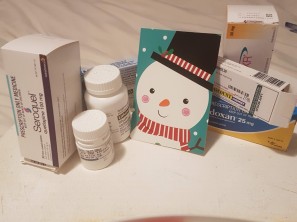
Received a handwritten Christmas card and instant scratchie from my pharmacist… one of my six medications alone costs $30/week. Treatment

20181207_215330

Reminded you to end the year saying no when your gut tells you to, and being kind to yourself when you feel like doing the opposite.

20181124_181854

Razor Blades In Mud: Laziness Or Depression?

20180925_122803

(Contains Confronting Content)

The amnesia of good mental health is powerful. When I’m well I struggle to conjure up what a depressive episode feels like. I can’t remember not being able to think my way out of it. I can even understand how easy it could be (without the experience of this insidious symptom) to dismiss those who suffer it as weak or lazy. This inaccurate, hurtful labeling occurs when people fail to understand the fundamental differences between a psychological challenge and a psychiatric symptom.

Continue reading “Razor Blades In Mud: Laziness Or Depression?”

My 2018 World Mental Health Day

Inked20181010_192225_LI

How was your World Mental Health Day? Mine happened to be pretty shit.

It doesn’t really matter, because mental illness doesn’t respect particular days, especially those deemed meaningful by human beings. I’ve spent enough birthdays, Christmases, and anniversaries in hospital with a mental illness to lend weight to this theory.

Paying homage to mental health (ours or others) on a designated day seems like a nice idea on the surface, but I’m not convinced it does a lot. I suspect it makes people who don’t suffer a mental illness feel good if they remember it or mark it. But is this just another version of tokenism? Does it really make any difference to the lives of people living with mental illness every day of the year?

A very smart woman who ran the SANE Peer Ambassador training workshops I attended recently made the excellent point that we don’t have World Physical Health Day.

And that is because every single day is World Physical Health Day. It would be far better to reach a point in history where caring for ourselves and being sympathetic towards those around us with mental illness is as matter of fact as caring for our physical health. We shouldn’t need World Mental Health Day.

Here’s what today looked like for me:

10 am

‘You look flat’

There is only one person I trust to make this assessment, and it’s the one who spoke to me. My psychiatrist. He and I have known each other and worked together for just over twelve years now. And I have trusted him with my life many times.

For the last four days I have felt flat. It started with a sluggish Sunday. But everyone has those. Right? I am exhausted. That’s ok, understandable. It’s been a stressful couple of months. However, in the space of those few days ‘I’m exhausted’ morphed into: ‘I am exhausted by life.’

I have been on this runaway train often enough to know that feeling exhausted by life is the last stop before suicidal ideations set in. And that is where it turns into not ok. By yesterday, when I made the appointment with my psychiatrist, I was feeling worthless. Black thoughts crept in and crowded out the positive, the motivated, the real me.

Thankfully I have the insight to recognise these feelings and thoughts as imposters. These are symptoms of depression setting in. They have been waiting in the wings for their moment. My Bipolar Disorder is here to collect, on all the stress and sleep deprivation I had no say over in the last few months.

In the past I went to war against these thoughts and feelings. So naïve to think I could somehow out think or out feel them. Such a rookie error. As is waiting to see how it will all play out. That tends to land me in hospital for months at a time. So, after four sluggish days, feeling flat, off, down, irritable, and with my memory and concentration beginning to fray I walked into my psychiatrist’s consulting room this morning. That’s when he proclaimed, before asking me a single question, that I looked flat. And I felt relieved, because I knew I’d been right to come.

I listed my symptoms. He looked at my chart. Then, reminiscent of a pilot attempting to correct a plane out of a nose dive, he said:

‘Let’s increase the Lexapro by 10mg and halve your Lithium dose until your mood comes back up. As soon as your mood lifts, go straight back onto the full dose of Lithium. And keep your appointment for next Friday.’

‘Good. Let’s try that.’

Then we speak of the heavy truth between us:

‘And if I crash before then….’

‘Then you will call me and come into hospital.’

Neither of us want that. Neither of us want the months in hospital possibly having ECT, because I’ve become catatonic. Yet we both know it’s still a possibility.

So, in honour of World Mental Health Day 2018 – here are my thoughts on what will get me well again:

Insight. Communication. Early intervention with a medication adjustment. Fingers crossed. And luck…so much fucking luck…

Making Sense Of It

Treatment

What Does Someone With A Mental Illness Look Like?

Sick Not Selfish

Wedding Breakfast Spoiled

Lessons For A Control Freak