Interruption To Regular Programming

red white and yellow medication pills
Photo by Anna Shvets on Pexels.com

I am in hospital, compromised by my standard symptoms that precede a manic or depressive episode. Looking more manic at this point though. The three symptoms are: lack of concentration, loss of short term memory, and pathological irritability.

If you have never been ravaged by them, then listing these symptoms can make it sound as though I am just a bit ditzy and cranky.

So wrong.

It’s going to take it out of me but let me see if I can paint a more accurate portrait of this beast. I am not yet so sick that it has silenced me.

The memory loss and lack of concentration leave my brain moth eaten. Holding onto thoughts long enough to articulate them takes a lot of effort. It is like using tweezers to try and catch tiny fish darting around in a big aquarium.

And the irritability? Surely as a rational, compassionate human being I should not feel so permanently unreasonable. I always insert the word ‘pathological’ in front of this symptom to try and describe just how out of control the stream of swear words is that run through my head when I am surrounded by people within ten metres of my personal space.

I say ‘pathological’ to describe the feeling of having hundreds of mosquito bites, my hands tied, and someone running a feather over the bites while they make fun of me. Sometimes it feels more like I’ve been sandpapered and then doused in lemon juice.

It is excruciating.

I will eventually get better. I always do. I know in time I will have the reserves to write properly again, and I will eventually go home and continue to rehabilitate. But for now, any spare energy is going towards doing what I need to do to get well, and if anything is left over it is going towards giving some moral support to my husband and children. So there may be some time between posts.

I always hope it won’t be too long but have been here often enough to know that it will take the time it takes and focusing on it won’t speed my recovery.

Stay tuned.

You may also be interested in:

Misunderstood Mania

My First Time


Men’s Voices Needed

20171014_164844

I am seeking Men’s Voices

If you are a man or know any men – please read on.

I recently accepted a SANE Peer Ambassador Speaking engagement for a small all-male audience in a male dominated industry (ages 30-50). To be clear, when this opportunity first arose a couple of months ago I applauded the company for their focus on male mental health and then sat back, certain they would find their ideal candidate in a male Peer Ambassador with a background in the trades to take this on.

Fast forward to a couple of weeks ago: No one had applied. It was re-advertised. This time with a note that the presenter did not need to be male. They just wanted someone willing to take this project on.

I gave it a lot of thought. On the surface, the only thing I have in common with this audience is my age. But I am also fast developing an interest in men’s mental health. Over the last couple of years I have supported several men from different areas in my life during episodes of mental illness.

Another strong motivator to learn more about this area, is being the mother of a son. I appreciate his future mental health is not all under my control, but I want to do what I can to secure him the most mentally healthy future I can.

So, I signed up for this engagement because I believe having me speak to this group has got to be better than having no one speak. Having no one, sends the message that men don’t experience mental illness. So wrong. Or it sends the message that if they do, then we shouldn’t be talking about it. Also, so wrong.

I am pretty confident I can do it, with the base knowledge I’ve got now, but I believe it could be so much better if I had the voices of some men to include in this presentation.

So if you are a man or can direct a man to this post who has some lived experience of mental illness and is well enough to offer some insights (or even if you are a man who hasn’t lived with mental illness but has some thoughts), either message me (on facebook or instagram) or email me anitalink73@gmail.com

I’d love to have a casual chat or exchange some emails if preferred. Any information I am given will be used anonymously unless you specifically tell me you would like to be named and/or identified.

I have mentioned in other posts, I am a huge fan of stretching myself outside my comfort zone. I am definitely doing that with this engagement. I gently encourage you to stretch yourself too and get in touch with me. You could make a real difference to other men’s lives by donating your voice.

You may also be interested in:
As Mothers Of Sons

Where’s Your Comfort Zone?

RUOK Day: Full Disclosure

20190912_093247
Doing the talking, not the asking on RUOK day 2019


How was everyone’s RUOK day? Did you ask anyone? Did you get asked? Did you post or share something on social media about it, and feel good about participating?

As someone who lives with a severe mental illness I felt as though I should welcome RUOK day with open arms, that I should be thankful that someone was paying attention to ‘us’… for a day.

But I didn’t feel what the day wanted me to.

What did I feel? For starters, a little infantilised. And please before people send me enraged messages that that is not how they felt and that I am spoiling the fun for everyone, hear me out.

Continue reading “RUOK Day: Full Disclosure”

Misunderstood Mania

cristian-newman-wGKCaRbElmk-unsplash (1)

What do you know about mania?

Everyone knows depression is bad. But does this mean mania is good because it supposedly sits at the opposite end of the bipolar spectrum?

Mania is often painted as the cartoonish counterpoint to depression. Perpetually bright, happy, and fun. But it is not fun. It is the character in a horror movie who starts out friendly but then morphs into someone with sinister, glowing eyes.

Mania assaults your senses.

Continue reading “Misunderstood Mania”

My Sliding Doors Encounter With Our Public Mental Health System

Inked20171212_082951_LI

Have you ever had a moment when your answer to a question determined whether your life imploded?

I have.

It came five days into parenthood. I was lying on the floor in my maternity hospital room crying because I was trying to outrun a jaguar chasing me towards a cliff. Things were starting to go very wrong in my brain.

In the following months, when my mind warped and writhed in the grip of psychosis and later catatonic depression, and when what started out as postnatal psychosis turned out to be a first episode of bipolar 1 disorder, I could not imagine things being worse.

But they could have been.

Continue reading “My Sliding Doors Encounter With Our Public Mental Health System”

Mental Illness Doesn’t Respect Deadlines

20190729_064126
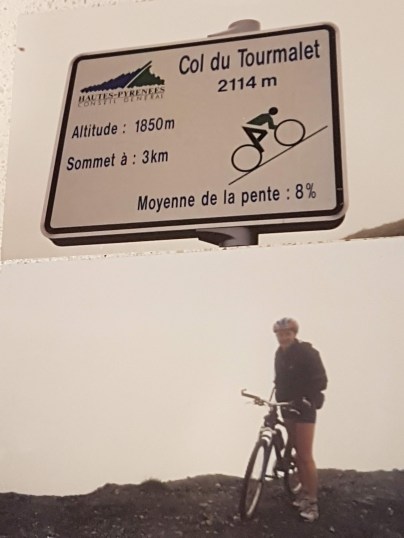
September 2001 – Ascending the Col du Tourmalet

‘How long until I’m better?’ gnaws at my insides.

When I ask my psychiatrist that question, he always answers honestly:

‘I don’t know how long, but you will get you better.’

That ‘I don’t know’ even when it’s followed by a promise of eventual wellness, is brutal.

Many years ago, my husband and I took part in a cycling trip over the Pyrenees from the south of France into Spain. The route followed the same path as the Tour de France sometimes does. The first day took us up the Col du Tourmalet, one of the longest and steepest climbs. We rode around twenty kilometres to the base of the mountain and then climbed for close to another twenty, each one steeper than the last, the air getting thinner and thinner.

The last two kilometres were gruelling. Mist closed in. We could barely see the drop off the edge of the mountain. We rode on our lowest gears. Our bones turned into burning jelly and our lungs felt as though they were trying to extract oxygen from water. We were forced to stop to catch our breath every twenty or thirty metres.

But there were markers to show us we were getting closer to the top. Mental footholds in the misty, painful, breathless soup. We had answers to ‘How much longer?’. And with them came hope and the tenacity to keep going. Although it was unbelievably challenging, we had an end point to work towards.

Continue reading “Mental Illness Doesn’t Respect Deadlines”

Visiting Someone In A Psychiatric Hospital?

BCPND visit 2010
2010 My daughter visiting her little brother and I in the mother/baby unit of the psychiatric hospital

‘My daughter never visits me in hospital. She doesn’t like this place.’

An elderly woman told me this in a private psychiatric hospital several years ago.  Sadness dripped from her words.

The thought of visiting someone in a psychiatric hospital (especially for the first time) can leave people feeling: Awkward. Uncomfortable. Fearful. Repulsed. Guilty. Ashamed. Misinformed. Unsure. To name a few.

What do you say and do if that’s you?

Continue reading “Visiting Someone In A Psychiatric Hospital?”

My Mental Health Toolbox

PWC keynote image

This week I had the pleasure of giving a keynote address for one of the departments at PWC (Price Waterhouse Coopers). As part of this I ran through some of the things I have found helpful to help me monitor and manage my mental health.

I got some really positive feedback after the presentation and requests for the list of things that help me with my mental health. So I thought I’d share that list as a post here:

EARLY WARNING SIGNS AND INSIGHT:

In this context insight is the ability to identify early signs of mental ill health in yourself. This is much more challenging than it sounds, because signs of mental illness can masquerade as normal feelings and emotions.

For example – irritability and sadness are part of the normal spectrum of human emotions, but if they are overwhelming and persistent and interfere with normal functioning, they can also be symptoms of depression.

It can take time to identify their intensity or persistence as abnormal. The other challenge is that when we are well, we can often think our way out of sadness or irritability. But when they become symptoms that is impossible.

Someone affected by symptoms of a mental illness can no more think their way out of them than someone with a nasty case of gastro can think themselves out of their vomiting and diarrhoea.

But whereas vomiting and diarrhoea are obvious signs of illness (both to the person experiencing them and everyone around them) it takes insight to recognise when symptoms of mental illness emerge.

For me early warning signs can be an inability to sleep even with a lot of medication, intense irritability, and poor short-term memory and concentration.

Early warning signs are different for everyone. By learning what ours are we can be proactive about seeking help rather than waiting for symptoms to worsen.

For further reading on an example of insight into a depressive episode you can go to: Razor Blades In Mud: Laziness Or Depression?

Continue reading “My Mental Health Toolbox”

You Don’t Die Of ‘Mental Health’: Why Wording Matters

words have power foto
Spot the error in the lay out

(CW: This post mentions suicide)

I just read an article that described one of singer Guy Sebastian’s friends as having:

‘lost his life to his battle with mental health’

Tragic. Another young man has become a statistic that should be at least partially preventable. Sadly, we can’t bring him back.

But there is something we can do to inch our way towards better describing why this happens. We can use accurate language when we write and talk about these tragedies.  Language that doesn’t mislead. On the surface it may not look like there’s much wrong with the above quote.

So, why do I feel exasperated about it?

Continue reading “You Don’t Die Of ‘Mental Health’: Why Wording Matters”

Psychiatric Medication And Stigma

medication stigma foto unsplash
Photo by Wei Ding on Unsplash

Do you believe stigma around taking medication for mental illness exists?

Or put it this way:

If you had to choose, would you rather disclose that you were taking insulin or psychiatric medication (antidepressants, anxiolytics, antipsychotics, mood stabilisers etc) to your employer, your family, your friends, and a room full of strangers? And why?

Continue reading “Psychiatric Medication And Stigma”