Stone Cold Sane

CW: Sanism, recent news cycle, mention of violence

It’s been nearly a week and I have intentionally held my horses and my tongue.

The news cycle has generated a flurry of hot takes on the horrific events at a Sydney shopping centre last weekend. It stumbled many times in its race for the truth and now appears to have moved on to fresher fodder. 

This week included a first for me. I have wished for a bipolar disorder flare up severe enough to render me unaware of the above-mentioned news cycle.  I have craved the security of being in hospital. Usually when I long for the hospital, I am too unwell to be at home.

Right now? I am stone cold sane.

I imagine anyone with a pulse, access to the news, and a shred of empathy has been devastated by the deaths, injuries and trauma that stained last Saturday afternoon. Me too.

I’ve also wished I could find comfort in plunging my head into the sand. However, for now, I am well enough to find that prospect more unbearable than having word projectiles launched at me.

It is easy for me to sink into the comfortable feather bed of my friends, family, and acquaintances who are supportive, who don’t other me, who see all of me. It is easy to feel complacent, to believe that yes things are getting better out there, that we are reducing stigma surrounding mental illness. But things are not getting better when psychosis is in the picture.

The minute the media spewed out the words ‘mental health issues’ and ‘schizophrenia’ in relation to the knife attacks, I braced myself for what was to come. And it came alright. Those words lit a match to the petrol-soaked kindling held by people paddling around in all of the news outlet and social media comments sections.

If you haven’t lived with what I have, you might think – ‘Don’t read the comments. They are rubbish.’

Yes. But they are also a barometer and thermometer. And if you are someone who walks through the world with a severe mental illness, knowing the temperature and pressure of your surroundings matters.

We all come at the comments sections from the launch pads of our life experience.

As someone who has lived experience of postnatal psychosis and lives with well managed bipolar disorder, here is a snapshot of where I come from:

My experiences of psychosis have been the most terrifying of my life. I have dry retched and screamed with fear in the middle of them. And I have been safe and receiving the best care when they have happened.

I can’t imagine how I would have survived, let alone felt, if I had been experiencing this awful symptom, without care and treatment, while homeless, in the throes of addiction, or without the privilege I live with. If I were still alive, I don’t know what path I’d be on.

Over the last 17 years I have written and talked about not only my experiences but the failures of the public mental health system that are at least partially responsible for thousands of people having a poor quality of life when they don’t need to. I have pointed out many times that these failures almost always contribute when tragedy is the last stop on the derailed train of a poorly managed or unmanaged severe mental illness.

I have gone on ad nauseum about stigma surrounding severe mental illness, and the barrier it forms between people who need good care and their ability to access it.

And I am far from the only one writing and talking about it. Yet here we are.

Here I am feeling punched in the gut by two words that popped up frequently in the comments sections this week. One of my most hated pejoratives used to be ‘psycho bitch’. This week ‘psycho bitch’ was toppled by ‘these people’.

‘These people’ is less in your face than ‘psycho bitch’ – but more sinister. Where ‘psycho bitch’ is aggressive, ‘these people’ drips with contempt. ‘These people’ can be applied to any demographic the speaker or writer has a problem with. When I read ‘these people’. I picture the words tripping out of the mouths of people like Pauline Hanson, Adolf Hitler, Donald Trump,

To clarify, this week ‘these people’ in the comments sections was not a descriptor of knife wielding mass murderers. ‘These people’ referred to people – like me – who live with severe mental illness.

And the gist of the recommendations for ‘these people’ was that we should ‘be rounded up and locked away, or burn in hell’ and that we are like ‘vicious dogs who should not be let out in the community.’

While these sentiments frustrate and sicken me, I am not worried about me. I have an accurate diagnosis, access to good care, insight, and know how to look after myself.

I worry about people who are having a first or early experience with symptoms of a severe mental illness, who read this poison when they are alone, who soak it up and believe it to be the truth. This stigmatising language is enough to stop someone who is new to this, or entrenched in a stigma spiral, getting the help they need. This is particularly disheartening knowing that early interventions, especially when it comes to psychosis, give the best outcomes.

Most people who don’t get the help they need will never hurt anyone else, but they are at risk of having a poor quality of life, or not surviving their illness.

And anyone who includes stigmatising language in their vocabulary actively contributes to this cycle of suffering.

Last Saturday’s perpetrator may have been a misogynistic arsehole, capable of violence, regardless of his history of a mental illness.

Or his actions may have resulted wholly from unmanaged or poorly managed long term mental illness featuring psychosis and little help from the public mental health system.

Or it might have been a combination of both.

Most of us will never know.

So, do we need to?

I used to think so.

I used to think that the more detail in reports about a perpetrator’s mental ill health and areas where the mental health system had potentially failed them, the more the public would understand.

But I no longer believe there is any benefit in feeding a baying-for- blood public, click baity snippets or even more detailed information that they don’t appear to have the experience, compassion, or education to process rationally and fairly.

Consistent bad reporting on mental illness and its repercussions hurts vulnerable people. We may as well slide back into that dangerous fertiliser for stigma – silence.

You can report media coverage that stigmatises mental ill health at stigma watch here: https://www.sane.org/get-involved/advocacy/stigmawatch

For further reading about complex mental health conditions and stigma I strongly recommend journalist and author Elfy Scott’s book:

The one thing we’ve never spoken about: Exposing Our Untold Mental Health Crisis

You can find this book here: https://www.elfyscott.com/book

Elfy also wrote this excellent article for Crikey during the week, which I contributed a small quote to: https://www.crikey.com.au/2024/04/17/bondi-junction-killer-schizophrenia-mental-health-reporting/

I have written several posts about media reporting and stigma surrounding complex mental ill health over the years. Here are some that you might like to check out:
Media-Made Monsters

Lies Of Omission: What You’re Never Told

Mind Your Language Katy Perry

Guilty Of Postnatal Psychosis

Mental Illness And Humour

Your Mental Illness? Make It Your Narrative

CN: brief non specific mentions of suicide, trauma, and eating disorders

If you have lived experience of mental illness, who tells your story?

Or even just fills in the blanks?

Silence about lived experience of mental illness from those who live with it is a frustrating paradox. Silence breeds stigma. Stigma breeds silence.

And there is a certain hypocrisy to complaining about the stigma if we choose silence.

I don’t say this lightly or without understanding the complexities of speaking out about our lived experiences.

I don’t live with an unprocessed trauma underlying my mental illness. Nor have I experienced treatment (or lack thereof) in the public mental health system. So, I have no right to speak about the ability or willingness of people to share their lived experience in these circumstances. I live with straight, white, cis-gendered, able bodied privilege. This means my path to diagnosis and high quality mental health care has been smoother than for those who don’t. All these factors make sharing my experiences easier.

One of the things I love about writing this blog is having ultimate control of my narrative. I don’t get paid for my posts. But I also don’t answer to anyone.

But I did recently have my voice stolen for a bit and I loathed the experience.

I’ve done some media interviews over the years Radio And Podcast Interviews and have generally felt empowered by and happy with the outcomes. Until this most recent one.

I agreed to it before I knew it would be written in first person based on a phone interview with me, but not written by me.

I was sent the article to fact check before it was published. The facts were correct. I hadn’t been misquoted, but it sounded nothing like me. It made me feel less than who I am. I was able to suggest some alterations. But even once my changes were incorporated the final article still felt clumsy. I would not have published it as one of my posts.

The journalist who interviewed me didn’t even tell me when the article was published. I found out when another journalist (who’d read the article) contacted me to ask if I’d be willing to interview for another ‘first person’ article written by them, about my experience of psychosis.

I politely declined. This (second) publication’s articles are sensationalist, pumped out to shock the masses and exploit the contributors. It would have been a hatchet job on my values. The opposite of empowering those with lived experience, educating those without.

I have no hesitation broaching my experience of psychosis with individuals, organisations, or the media, but only on my terms. Stories of psychosis are still in a different category to those of anxiety and depression. The media is not as used to them. They have to be handled with care and controlled by the person telling them.

I don’t even like my family or friends speaking for me about my illness. Not because I don’t trust them, but because I have more practice at relaying my experience with context and nuance.

However, disclosure around mental illness without an awareness of how to do it safely can be damaging, even dangerous. Whether you disclose your experience to one person, several, or in the media, yours and your audience’s safety must be your first priority.

If disclosure is likely to compromise your current mental health or retraumatise you, then you are not in the right space for it.

Especially if you are sharing with a wider audience you have to consider that some of that audience may be living through an episode of mental illness at the time of your disclosure and be particularly vulnerable to any information you share.

Content notes at the beginning of any article or interview containing triggering subjects for example suicide or trauma give your consumer the choice about whether they feel well enough to read/watch/listen on.

There are safe ways to relay distressing experiences to your audience. For example sharing an experience of a suicide attempt can help open up vital conversations around suicide and lessen stigma. But sharing explicit details about methods can be harmful to anyone in your audience who may be experiencing suicidal ideations. Similarly specific details about body weight, diet, or exercise should be left out of a safe disclosure around eating disorders.

Sharing your experience of mental illness is a personal decision. You have the absolute right not to.

But think about this – If you live with a mental illness and choose silence, you are leaving a space, for someone else less qualified to speak for you. A hole shaped like you, to be filled with more stigma.

If we give the world a void instead of our voices, it will fill it with its own assumptions. So, if you are well enough and able to do so – set your terms and boundaries, choose your conduit and gift the world your story.

I decided not to publish the link to the external article mentioned in this post. If you are interested in reading it to compare its style to my usual posts feel free to message or email me and I will share it individually.

You may also be interested in:

Media-Made Monsters

Don’t Call Conspiracy Theorists Crazy

Vulnerability And The Exploitation Of Kanye West

Tokenism In Mental Health Awareness

Written for QLD Mental Health Week 2020

Saturday 10th October is World Mental Health Day and I feel a little conflicted about highlighting it. There are a lot of positives to having dedicated days or weeks to draw our attention to mental health. But I also believe we need to approach these awareness days with a little caution. It’s too easy to post or repost something related to the topic, tick the box of doing good and move on with our days.

Ironically these tokenistic efforts are becoming more common as awareness around mental ill health grows, especially when we don’t have to move beyond the comfort of our keyboards to feel as though we are achieving change. Of course it is good that there is more awareness, tolerance and marginally less stigma surrounding mental ill health than there was fifty or even twenty years ago. But we have to make sure we don’t replace the old insensitivities with their more modern counterparts.

I have written about my dislike of RUOK day before RUOK Day: Full Disclosure and this year I heard another perspective that reenforced my reasons for disliking this day. When I am well, my psychiatrist appointments usually consist of me requesting scripts for any medications I am running low on, a brief check in with how I’m going and then we chat about the state of the world, my advocacy work, his psychiatry work. This year one of my appointments happened to fall around RUOK day and we talked about the pros and cons of this day. I expressed my opinion and my psychiatrist referenced one of his patients coming in on RUOK day in distress because they were bombarded by people they knew asking them if they were ok. People they didn’t hear from for the rest of the year. People who were probably well intentioned, but using them as the token mentally ill person in their lives, to tick the box of having asked: RUOK?

Awareness around mental ill health should not be confined to one day or one week of the year. Episodes of mental illness flare unpredictably and feel as though they will never end. This feeling is fed by the fact that no one can tell you when it will end. There are good days and worse days. There are days when the risk of it turning into a terminal illness skyrockets. Someone may have a spectacularly good day on RUOK day, a calm and uneventful mental health week, but be suicidal sometime in April or on Christmas day, when it is all too easy to be under the impression that we showed our support for those among us living with mental illness back in mental health week, and Christmas day is busy and by April we are into Caesarean awareness month and IBS awareness month.

 So what can we do to be meaningfully aware of the impact mental ill health has on those of us who live with it, and what can we do to support them for more than a day or a week of the year?

Everyone who lives with mental illness is different and everyone’s experience is different even if they live with the same diagnosis. So, I don’t speak for everyone.

For me – I don’t need to be asked how I am. I have enough insight into my Bipolar 1 Disorder to know when I need to seek help. I am fortunate to have good support systems in place, so I don’t tend to feel lonely or isolated.

For me it is all about the language people use. Hearing or seeing stigmatising language either in the media, on social media, or spoken, punches me in the gut. When I am confronted with words like nuts, crazy, lunatic, psycho, mental institution, – the list is long – it belittles me. It strips away the facts of my life, my healthy functional relationships, my personality, my university degrees, my profession, my interests, my sense of humour and it reduces me to a hellish caricature of who the misinformed masses believe someone mentally ill is.

So, think about how you write and speak around me. If you hear or see someone else perpetuating stigmatising language around mental illness, call it out. Do so politely, but raise awareness of it. I do it as often as I can, but I also get tired of being told to shut up, get over it, or that I am overreacting.

Perhaps the most helpful thing you can do for someone in your life who lives with mental ill health is not to automatically ask them how they are, but to ask them what you can do to make them feel valued and supported all year round. They may answer: ‘Ask me how I am’ in which case you are doing it meaningfully and mindfully, not because it is a certain day of the year.

All that said, Happy World Mental Health Day everyone. In honour of it also being Queensland Mental Health Week from 10th-18th Oct I am aiming to drop a few additional posts in Thought Food this week.

Look after yourselves and each other!

You may also like to check out:

RUOK Day: Full Disclosure

Mind Your Language Katy Perry

Don’t Call Conspiracy Theorists Crazy

Don’t Call Conspiracy Theorists Crazy

If I were to call out language that stigmatises mental illness every time I came across it on social media, I’d be posting about it every couple of days. But no matter how called for I may feel it is, I don’t want to douse my readers in a bitter diatribe that often. I also enjoy a break from being told to shut up or get over it by people who don’t agree with my assessment of stigmatising language. So I’ve let it go for a while.

But I came across the following facebook post recently, which hit a nerve and left it throbbing for long enough to drive me to the keyboard:

Thoughts?

Now, I don’t like the word lunatic – but that is the least of the problems with this post. And as much as I’d like to agree with the sentiment, I have to ask:

What does this post imply about those of us who live with severe mental illness?

It equates us with people who believe and propagate fake news. The most pejorative label for people who don’t believe in climate change, the author of that snippet could come up with was to portray them as mentally ill.

Anti vaxxers, people who don’t believe in Covid 19, or who don’t believe in climate change don’t  have those beliefs because they are mentally ill. They believe them because they are poorly informed and possibly brainwashed.

So, let’s not conflate pathological delusions experienced as a symptom of mental illness with people who are just misinformed and who refuse to delve into some scientific research.

I live with Bipolar 1 Disorder, and have experienced delusional thinking as a symptom of this illness. I not only believe in climate change, I am very concerned about it. I believe the overwhelming benefits of vaccination outweigh the few risks. Covid 19? Of course it exists. Donald Trump? Ten of my posts wouldn’t be long enough to list the reasons he has to go.

And yet when I jump onto social media I am bombarded with posts that tell me that the best way to insult  the people who believe the opposite of the truth is to call them mentally ill, and thereby imply that if you live with mental illness you are in the same category as people who can be brainwashed.

Delusions caused by mental illness are completely different to the overconsumption of, and belief in, fake news. By labelling all of the people who don’t believe in scientific proof as mentally ill you insult and dismiss the many people who live with mental illness and who are critical thinkers who do believe in scientific evidence.

I can only speak from my experience of delusional thinking, but here’s what I know:

Delusional thinking isn’t a contagious false belief system you are indoctrinated with. True delusional thinking as a symptom of mental illness is completely involuntary. You don’t choose to experience it. It sweeps in on the coat tails of an illness that fundamentally changes how you interpret the truth.

For me, delusions are accompanied by mania which at its worst tilts into psychosis. The inside of my head feels as though I am riding a rollercoaster that’s on fire. I don’t sleep. The first time it happened, I tried to convince everyone of the truth to my malignant belief system. And in my experience true delusions due to mental illness resolve with antipsychotic medications.

The chances are your average antivaxxer or climate change conspiracy theorist will not change their beliefs if you dose them with antipsychotic medications.

So, If you read the post above and shrugged your shoulders or like several of my facebook friends gave it a like, let me rewrite it for you and see if you change your mind. Here goes:

‘If you believe all of (sic) world’s scientists got together to fake 7000 climate studies as part of (sic) elaborate hoax, you are not conservative you are a cancer patient. We have to stop treating people brainwashed by right-wing propaganda as political actors and start treating them on an oncology ward.’

Uncomfortable yet? You should be because the implication that people who live with cancer are idiots, is as ridiculous as it is insulting.

So why is it ok to equate my serious mental illness and the fact that I have at times spent months in a psychiatric hospital to me being an ignorant conspiracy theorist?

You may also be interested in checking out:

Mind Your Language Katy Perry

You Don’t Die Of ‘Mental Health’: Why Wording Matters

Radio Interview On Electroconvulsive Therapy (ECT)

Ect interview photo

A few weeks ago I took part in an ABC radio national interview about my experience with ECT (Electroconvulsive Therapy). A psychiatrist and two other people who had had ECT were also interviewed. I am very happy I got to contribute to such a balanced, informative, digestible piece about a psychiatric treatment that is shrouded in stigma and false information. Highly recommend a listen when you get a moment.

Click the link below to get to it:

https://www.abc.net.au/radionational/programs/allinthemind/electricity-and-the-brain/12453120

You may also be interested in:

ECT: Blowing up some myths – Part 1

ECT: Blowing up some myths – Part 2

Vulnerability And The Exploitation Of Kanye West

vulnerability image

Kanye West is unwell again. Hurtling through a manic Bipolar episode while the world laughs. And as someone who lives with Bipolar 1 Disorder, I feel for him.

In the early years after my diagnosis, during one manic episode (while hospitalised) I started discussing my sex life with strangers. My friend who was visiting me steered me gently away.

Kanye doesn’t seem to have anyone to steer him away, gently or otherwise.

Kanye is a wealthy, influential man, who probably has access to the best mental health care available. But I don’t believe his problem is accessing top quality care.

His problem is that he lacks insight and no one around him is game to have the difficult conversations with him. The conversations that point out that while he may be a brilliant artist when he is relatively stable, when he develops manic symptoms his brain needs a break from the world, and the world is not entitled to its contents.

Instead, when Kanye becomes unwell his mania is left to run free.

He has been open about his choice not to take medication to help manage his Bipolar Disorder. That is his right. Medication doesn’t work for or agree with everyone.

But he seems to be unaware that to successfully manage this illness without medication, you need to employ other strategies. You need to hone your insight. And if your insight when you are unwell is shaky, you need a mental health directive.

This means sitting down with your doctors and people closest to you when you are well and discussing how you would like to manage your symptoms when you are unwell. And if you experience manic episodes, one of the most basic requests may be to not have access to the media – social or otherwise – while symptomatic. Why?

Because mania can gobble up your inhibitions, make you see the world through a paranoid lens, and sprout delusions of grandeur.

Kanye recently gave an interview to Forbes magazine during which he rambled for four hours, to this effect:

‘…They want to put chips inside of us, they want to do all kinds of things, to make it where we can’t cross the gates of heaven. I’m sorry when I say they, the humans that have the Devil inside them. And the sad thing is that, the saddest thing is that we all won’t make it to heaven, that there’ll be some of us that do not make it.”

“Clean up the chemicals. In our deodorant, in our toothpaste, there are chemicals that affect our ability to be of service to God.”

If Kanye were a homeless man on a street corner sharing these ideas with the world, the interviewer from Forbes magazine would probably have walked past quickly, maybe shuddering at such overt insanity.

Instead that interviewer sat and listened to him for four hours. Noted down delusional quote after quote and then published an article in which they even describe Kanye’s lack of awareness:

‘If it all sounds like a parody, or a particularly surreal episode of Keeping Up With The Kardashians, West doesn’t seem to be in on it.’

Of course West isn’t in on it! He is walled off from reality by illness.

Did that interviewer ever pause to consider why much of what Kanye was saying made no sense? I suspect (with disgust) that they were fully aware their high profile subject was mentally unwell, but chose to exploit him while he was most vulnerable.

I have written thousands of words I thought were brilliant, while in the grip of mania. But once my symptoms recede, I am relieved no one else has read these largely nonsensical word vomits. Because if they had, that would invalidate the quality of my writing when I am healthy.

But Kanye’s word vomits are out there for all the world to snidely pick at, to brand him a rambling idiot and someone to be sniggered at.

At the time of publishing this post, headlines announcing Kanye’s withdrawal from the presidential race are emerging.

I understand stress and sleep deprivation are a president’s companions for most of their time in office, that pushing through is a corner stone of juggling the demands of the job.

Stress and sleep deprivation are the perfect fertiliser for Bipolar episodes to flourish. Bipolar episodes, once active, can’t simply be pushed through. They have no respect for deadlines or work demands – let alone international or national emergencies.

Whether Kanye recognised the risks of pursuing the presidency himself or whether someone in his circle came forward to have the hard conversations and steered him gently away, I am relieved for him.


You may also be interested in:

Misunderstood Mania

Psychiatric Medication And Stigma

If I Were Kanye Westwritten two years ago with a different angle to this post


My Sliding Doors Encounter With Our Public Mental Health System

Inked20171212_082951_LI

Have you ever had a moment when your answer to a question determined whether your life imploded?

I have.

It came five days into parenthood. I was lying on the floor in my maternity hospital room crying because I was trying to outrun a jaguar chasing me towards a cliff. Things were starting to go very wrong in my brain.

In the following months, when my mind warped and writhed in the grip of psychosis and later catatonic depression, and when what started out as postnatal psychosis turned out to be a first episode of bipolar 1 disorder, I could not imagine things being worse.

But they could have been.

Continue reading “My Sliding Doors Encounter With Our Public Mental Health System”

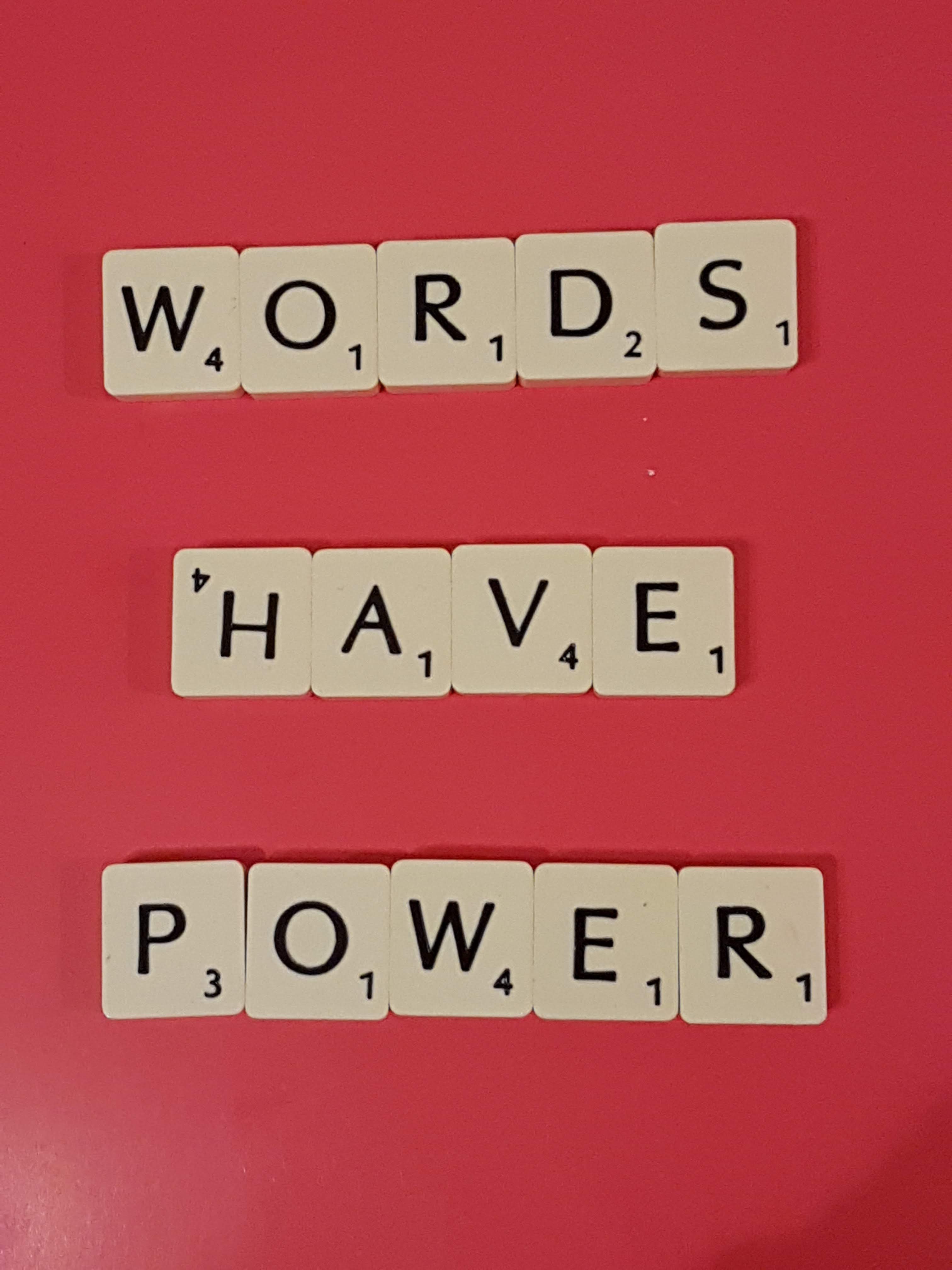
You Don’t Die Of ‘Mental Health’: Why Wording Matters

words have power foto
Spot the error in the lay out

(CW: This post mentions suicide)

I just read an article that described one of singer Guy Sebastian’s friends as having:

‘lost his life to his battle with mental health’

Tragic. Another young man has become a statistic that should be at least partially preventable. Sadly, we can’t bring him back.

But there is something we can do to inch our way towards better describing why this happens. We can use accurate language when we write and talk about these tragedies.  Language that doesn’t mislead. On the surface it may not look like there’s much wrong with the above quote.

So, why do I feel exasperated about it?

Continue reading “You Don’t Die Of ‘Mental Health’: Why Wording Matters”

Accepted: Crumbs To Canary Wharf

20190419_210616

It started on the paper bag that the breakfast toast came in. First, I shook out the crumbs to give me an even writing surface. I had no other paper. I was inside the SCU (Special Care Unit), in a psychiatric hospital in August 2006, emerging from my first psychotic episode. And as the medication slowed my boiling brain, a miniscule part of me, took in my environment and thought:

‘I am one step away from a padded cell. Unbelievable. But while I am here, I will record as much as I can, because not many people experience this.’

So, I made my words tiny to fit as much detail as I could onto the toast bag.

Over a year later I wrote an account of my psychotic episode based on that bag and some diary entries. My supervisor for my Master of Arts in Writing Editing and Publishing read it.

‘This is really good writing. You should consider expanding it into a memoir.’

Continue reading “Accepted: Crumbs To Canary Wharf”

Bruised

20111130-171621

In the beginning I struggled to accurately identify the source of my discomfort. First, I felt cranky. Then defensive. Sentences coiled through my head, arguing my case to non-existent judges.

And then the fantasy started:

The sanctity of an operating theatre. Me doing surgery. A space where competence is nonnegotiable and where logic rules supreme. A space where superfluous emotion is rinsed off in the scrub sink. The flat mineral smell of iodine, hands held up, so drips go down. The linearity of actions. Being handed packets – the hand towel, the gown and gloves, instruments. All sterile. A clean slate for this one patient, this one surgery. The fantasy is not about wanting to re-enter veterinary practice. It is about control. The thought of having that degree of control over a situation makes me shiver with longing right now.

Continue reading “Bruised”