You Don’t Die Of ‘Mental Health’: Why Wording Matters

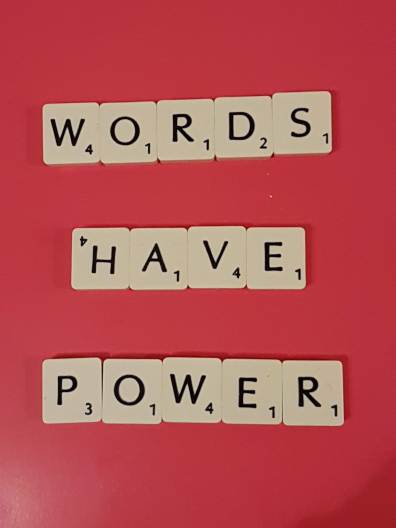
words have power foto
Spot the error in the lay out

(CW: This post mentions suicide)

I just read an article that described one of singer Guy Sebastian’s friends as having:

‘lost his life to his battle with mental health’

Tragic. Another young man has become a statistic that should be at least partially preventable. Sadly, we can’t bring him back.

But there is something we can do to inch our way towards better describing why this happens. We can use accurate language when we write and talk about these tragedies.  Language that doesn’t mislead. On the surface it may not look like there’s much wrong with the above quote.

So, why do I feel exasperated about it?

Continue reading “You Don’t Die Of ‘Mental Health’: Why Wording Matters”

Psychiatric Medication And Stigma

medication stigma foto unsplash
Photo by Wei Ding on Unsplash

Do you believe stigma around taking medication for mental illness exists?

Or put it this way:

If you had to choose, would you rather disclose that you were taking insulin or psychiatric medication (antidepressants, anxiolytics, antipsychotics, mood stabilisers etc) to your employer, your family, your friends, and a room full of strangers? And why?

Continue reading “Psychiatric Medication And Stigma”

What a mental illness can teach you about your mental health

jony-ariadi-197568-unsplash Photo by Jony Ariadi on Unsplash
Photo by Jony Ariadi on Unsplash

Here’s a paradox: My mental health improved after I developed a mental illness. When I am not symptomatic (which is a lot of the time) my mental health is fantastic. It is possibly better than that of many people who don’t live with a mental illness. Here’s why:

Mental illness can teach you a lot about mental health, because it confronts you with the choice to change the way you approach your life.

Continue reading “What a mental illness can teach you about your mental health”

Psychology Of A Rescue

lifebelt-4148444_1280

Have you ever tried rescuing someone who doesn’t want to be rescued?

There’s the itchy frustration of being able to see they need help. You do everything in your power to help them, but they want none of it.

We had the following teachable situation take place in our household recently:

My daughter loves birds and started feeding the sulphur crested cockatoos in our garden. Word of the new food source got around. Each day more arrived. One morning the cohort included a scruffy straggler. He was bullied by the others. His point of difference was a plastic cone around his neck, almost identical to the Elizabethan collars we put on dogs and cats to prevent them chewing out their stitches.

But this was a school sports marker. The cockatoo had poked its head through it. I assume out of curiosity or to get to food in the middle of it. And now it was stuck. It could still eat, but not well. We thought hard about how we could help this bird. I suspected removing the cone wouldn’t be difficult if we could only catch it.

It flew off as soon as we got anywhere near it. My daughter phoned Australia Zoo who referred her to a wildlife organisation, who referred us to the RSPCA. I explained the dilemma and sent pictures of the cone headed bird. The RSPCA delivered a large metal dog crate and we rigged the door with string, so that we could close it remotely.

Continue reading “Psychology Of A Rescue”

Accepted: Crumbs To Canary Wharf

20190419_210616

It started on the paper bag that the breakfast toast came in. First, I shook out the crumbs to give me an even writing surface. I had no other paper. I was inside the SCU (Special Care Unit), in a psychiatric hospital in August 2006, emerging from my first psychotic episode. And as the medication slowed my boiling brain, a miniscule part of me, took in my environment and thought:

‘I am one step away from a padded cell. Unbelievable. But while I am here, I will record as much as I can, because not many people experience this.’

So, I made my words tiny to fit as much detail as I could onto the toast bag.

Over a year later I wrote an account of my psychotic episode based on that bag and some diary entries. My supervisor for my Master of Arts in Writing Editing and Publishing read it.

‘This is really good writing. You should consider expanding it into a memoir.’

Continue reading “Accepted: Crumbs To Canary Wharf”

Bruised

20111130-171621

In the beginning I struggled to accurately identify the source of my discomfort. First, I felt cranky. Then defensive. Sentences coiled through my head, arguing my case to non-existent judges.

And then the fantasy started:

The sanctity of an operating theatre. Me doing surgery. A space where competence is nonnegotiable and where logic rules supreme. A space where superfluous emotion is rinsed off in the scrub sink. The flat mineral smell of iodine, hands held up, so drips go down. The linearity of actions. Being handed packets – the hand towel, the gown and gloves, instruments. All sterile. A clean slate for this one patient, this one surgery. The fantasy is not about wanting to re-enter veterinary practice. It is about control. The thought of having that degree of control over a situation makes me shiver with longing right now.

Continue reading “Bruised”

Your Mental Load = Your Responsibility

20190328_184140

Have you heard of ‘the mental load’ (also known as emotional labour)?

The term is bouncing about everywhere right now. Google it if you like, but this is my understanding of it:

The mental load is carried (predominantly) by women. It comprises the things that (they believe) are essential to the welfare of their relationship or family, for example meal planning, remembering relatives’ birthdays, or buying toothpaste before it runs out. The carrier of the mental load often feels overwhelmed or resentful because their partners don’t share it.

Now, I am all for the equitable distribution of work, including paid employment, childcare, chores, and general life admin. However, my sympathy for people who complain about their ‘mental load’ nose dives when I hear or read this:

‘My partner should know what to do without me having to ask them. Me having to ask adds to my mental load.’

Continue reading “Your Mental Load = Your Responsibility”

Who Holds You When You’re Broken?

20170702_192834

I’ve been told the first time we met I was shuffling slowly up and down a blue carpeted corridor. Slumped body. Empty eyes. I barely registered being asked how I was with a slowly exhaled

‘Not so good.’ before moving on with my pram.

I say ‘I’ve been told’, because I don’t remember our first meeting or the following weeks. I was sicker than I’d ever been. Not many people would have repeatedly made friendly conversation with someone as unresponsive as I was.

She did. At a time when she wasn’t well herself.

When I finally re-emerged after several months of illness, I was delighted to find I had a new friend. A friend I never would have met in my geographical or professional circles. A friend who, like me, had spent the early months of first-time motherhood in a psychiatric hospital instead of at home.

Continue reading “Who Holds You When You’re Broken?”

Our Vets Are Dying For Your Pets

Image result for veterinary euthanasia images
Image courtesy of Cascade Veterinary Hospital

Contains Confronting Content

I recently removed the key to the dangerous drugs safe in the veterinary practice I’ve just resigned from, from my key ring to return it. And as I did so, I thought:

‘I wonder if my suicidal ideations will change now?’

I’ll come back to that.

I also recalled how often I’d heard the following over the last twenty years in practice:

‘My son/daughter/nephew wants to be a vet when they grow up.’

Always uttered under the impression that veterinary work is a dream job. But the dream can morph into a nightmare. There is currently a shortage of vets (in part) because our burn out and suicide rates are sky-high.

So why, after dedicating years to entering this prized profession, do many vets want out?

Continue reading “Our Vets Are Dying For Your Pets”

Silent Night Instead Of Chaotic Christmas

20171215_183809
Childhood Christmas memories (early 1980s)

It seems Christmas tends to wound us. Just judging by all the calls to look after ourselves at this time of year. Every day brings a fresh wave of breezy yet cautionary social media posts urging us to practice ‘self-care’ more now than ever. And apparently, grief and illness don’t take a break for this most wonderful time of the year. Who knew?

It is true that the expectation to be happy because it’s Christmas (both unspoken and sung loudly) adds unnecessary pressure to already busy lives. It is not in today’s Christmas’s nature to nurture.

For a holiday supposedly espousing kindness, joy and happiness, it doesn’t heal the hurts the year might have inflicted on us. If anything, it deepens our wounds because it insists we turn ourselves inside out to please the world, rather than recovering from the demands of the year. Perhaps, if we approached Christmas less as something that will inevitably leave us feeling worn out and stressed, we wouldn’t need to heed social media advice to ‘look after ourselves over the festive season’.

What if Christmas were all about replenishing ourselves as opposed to needing self-care as damage control?

Continue reading “Silent Night Instead Of Chaotic Christmas”